
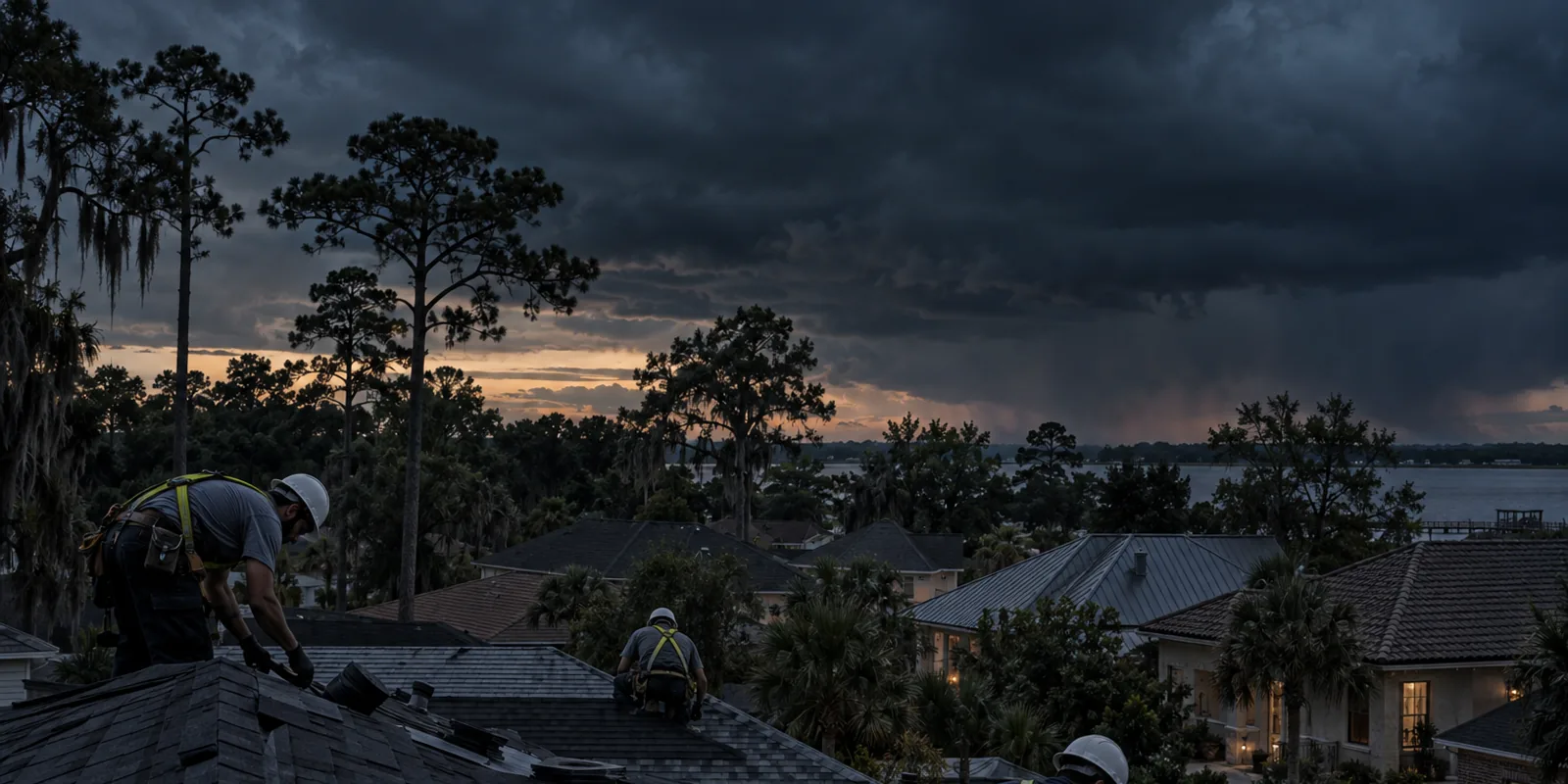
A roof in Jacksonville is asked to do more than a roof almost anywhere else in the country: 50 inches of rain a year, afternoon thunderstorms with downdrafts from June through September, a hurricane season that runs to the end of November, nor’easters in the winter, salt air near the coast, and a sun that bakes asphalt and dries out every sealant and rubber boot on the roof. Most of the leaks a roofer sees in Duval County started as a small problem that nobody looked at for five years. This page explains what an annual inspection covers, what maintenance actually involves on a Florida roof, how algae is treated without harming the shingles, what wind mitigation and 4-point inspections document for your insurer, when a pre-purchase inspection makes sense, and how maintenance plans work on commercial roofs.
Why Jacksonville roofs need an annual inspection
Roof damage here is cumulative and mostly invisible from the driveway. The neoprene collar on a plumbing vent boot cracks in a ring after a decade of UV; nothing shows until the bathroom ceiling stains. Sealant at a chimney counterflashing or a skylight curb dries and pulls away in the heat. A ridge cap creases in a winter nor’easter and lies flat again until the next gust tears it off. Pine needles fill a valley in Mandarin or Ortega and hold water against the shingles all summer. Live oak leaves clog a gutter in San Marco, water backs up under the drip edge, and the fascia and the first foot of decking rot.
An inspection every spring, before hurricane season opens on June 1, finds these while they are still small repairs. An inspection after any storm with strong wind, hail or falling limbs finds the damage while it is still clearly storm damage and inside the one-year window Florida law allows for filing a claim. The emergency and storm repair page covers what to do when water is actively coming in; this page is about keeping that from happening.
What a maintenance visit covers
The roofer walks every slope, not just the one you can see from the street. On shingle roofs that means checking ridge caps and rakes for lift, lifting a few tabs to confirm the seal strips are holding, and looking for granule loss, blistering and nail pops. On metal roofs it means checking fasteners, washers, laps and closures. On tile it means looking for cracked and slipped tiles and lifting a few at the eaves to see the underlayment. Every roof gets its valleys, flashings, pipe boots, vents, skylights and chimney checked, and the attic is inspected for stains, daylight, wet insulation and blocked soffit vents.
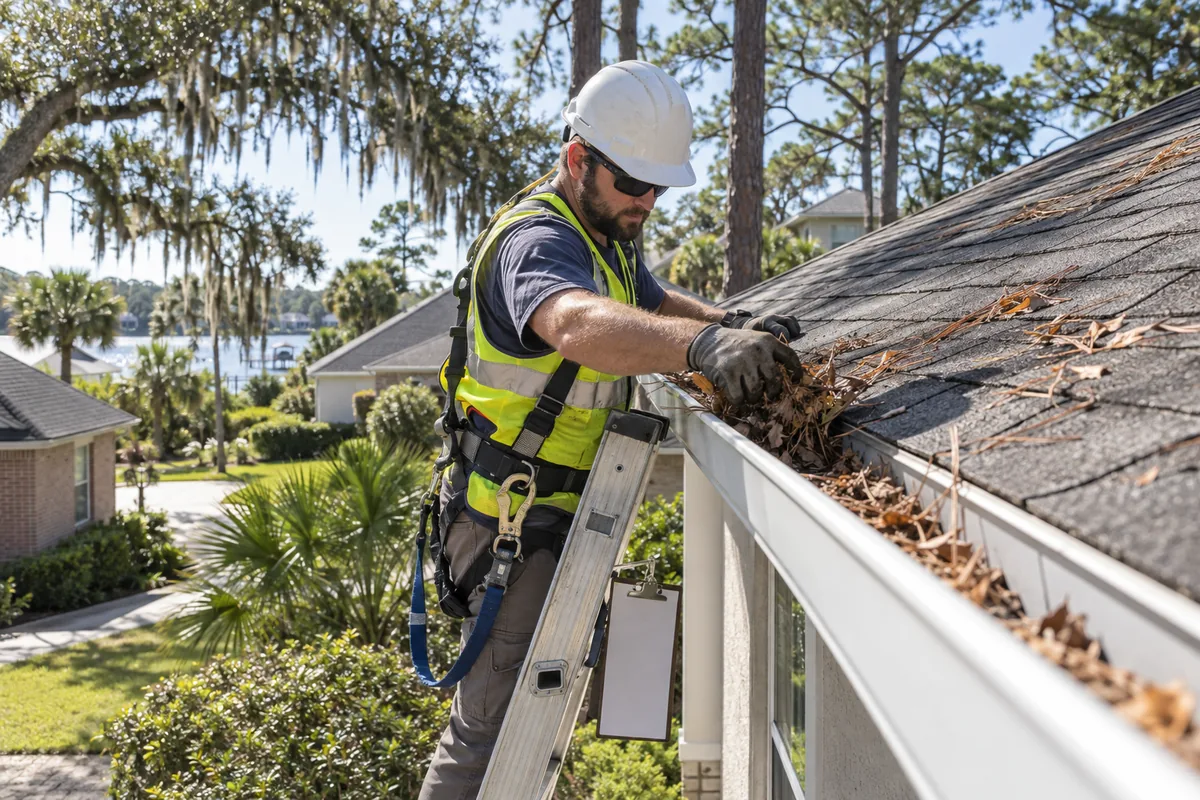
The maintenance itself is unglamorous and effective. Gutters, downspouts, valleys, flat roof drains and scuppers are cleared of needles, leaves and the seed pods that magnolias and sweetgums drop. Cracked pipe boots are replaced, which on a Jacksonville roof is the single highest-value repair per dollar because it prevents the most common leak in the county. Sealant at flashings, vent flanges and skylight curbs is cut out and renewed rather than smeared over. Loose ridge caps and shingles are refastened and hand-sealed. Exposed fasteners on metal roofs are replaced. Small items are done on the same visit where the estimate allows; anything larger, such as a failed valley or a section of rotted decking, is written up separately so you can decide. The shingle roof repair page goes into the repairs themselves.
Algae, moss and soft washing
The black streaks on shingle roofs across Jacksonville are Gloeocapsa magma, an algae that feeds on the limestone filler in asphalt shingles and spreads on north-facing and shaded slopes in our humidity. Moss and lichen follow on roofs under heavy tree cover in Riverside, Avondale and along Julington Creek. They are mostly a cosmetic problem, but they hold moisture against the shingle, they draw HOA letters, and they make a roof look older than it is to a buyer or an insurance inspector.
The safe treatment is a soft wash: a low-pressure application of a sodium hypochlorite solution that kills the algae, followed by a gentle rinse, with the landscaping protected and wetted down first. Pressure washing is not an option on shingles. It strips the granules, the shingle’s only protection from UV, and turns a cosmetic problem into a roof that fails years early. Zinc or copper strips installed just below the ridge release ions with each rain that slow regrowth. On tile and metal roofs the method is adjusted for the material, and on a roof due for replacement the permanent answer is algae-resistant shingles.
Wind mitigation inspections and Form OIR-B1-1802
Florida insurers give credits for construction features that reduce hurricane damage, and the wind mitigation inspection is how those features get documented. The inspector fills out the state’s Form OIR-B1-1802 with photographs: the roof covering type and the permit date showing it meets the Florida Building Code, whether the roof is a hip shape or has gables, how the roof deck is nailed to the trusses, whether the trusses are attached to the walls with clips, single wraps or double wraps, whether there is a secondary water resistance layer such as peel-and-stick underlayment under the covering, and what impact protection the openings have.
Much of that is verified from the attic, which is why the inspection involves crawling around with a flashlight and a camera. A licensed contractor or inspector signs the form, and the report is generally valid for five years or until the roof is replaced. A new roof installed to current code, with the deck renailed and a sealed secondary water barrier, is the single biggest change most homeowners can make to that form. The size of the credit varies by carrier and policy, and no roofer can promise a figure, but in Florida the discounts are significant enough that the inspection nearly always pays for itself. Bring the form to your agent once it is complete.
4-point inspections and older homes
When a home is roughly 20 years old or older, Florida insurers usually require a 4-point inspection before writing a new policy: roof, electrical, plumbing and HVAC. The roof section records the covering material, its age and permit history, visible condition, any active leaks or damage, and an opinion on remaining life. Insurers frequently decline shingle roofs beyond about 15 years and metal or tile beyond 25 to 30 unless the inspection shows several years of life left, so it matters that the roof is in the best condition it can be in before the inspection is filed.
The practical order is to have a roofer inspect first, fix the cracked boots, loose caps and open flashings that would be noted as defects, and then have the 4-point completed. Homes in Arlington, Cedar Hills, Lake Shore and the older parts of Mandarin and Baymeadows fall squarely into this age range, and the sequence saves a lot of back and forth with the carrier. The post on how to choose a roofing company in Jacksonville explains why the inspector should hold a Florida DBPR roofing license rather than be whoever the listing agent knows.
Pre-purchase and real estate inspections
A general home inspection looks at the roof from a ladder or a drone and notes what is obvious. A roofer’s pre-purchase inspection walks the roof, lifts shingles, checks every penetration and flashing, examines the underlayment at the eaves, inspects the attic, and pulls the permit history from the City of Jacksonville or the Beaches city to confirm the roof is the age the seller says it is and was permitted when it was replaced. The report gives the buyer a remaining-life opinion, a list of repairs with rough priority, and the documentation an insurer will want to bind a policy. Sellers use the same inspection before listing so the roof does not become a negotiation at the end. Either way, the report is written, photographed and independent of whoever is selling the house.
Maintenance plans for commercial roofs
Low-slope roofs on office buildings along Southside Blvd, strip centers on Beach Blvd and Atlantic Blvd, and warehouses near NAS Jacksonville and the airport fail for one main reason: nobody goes up there until the tenant calls. A maintenance plan puts a roofer on the roof twice a year, in spring before the storms and in fall after the leaves. Drains, scuppers and gutters are cleared, seams and flashings are probed, HVAC curbs and pitch pockets are checked after any equipment service, small defects are repaired on the spot and everything is photographed into a log. Manufacturers typically require this kind of documented maintenance to keep a TPO or modified bitumen warranty in force, and property managers use the log for budgeting and for insurance. The commercial roofing page explains how plans are set up for a single building or a portfolio across Duval County.
What is included
- Annual roof inspection before hurricane season, walking every slope and checking the attic
- After-storm check with photographs of any wind, hail or debris damage for your claim file
- Gutters, valleys, drains and scuppers cleared of pine needles, live oak leaves and debris
- Cracked pipe boots replaced and sealant renewed at flashings, vents and skylights before they leak
- Loose shingles, ridge caps and fasteners re-secured, and small repairs done on the same visit when possible
- Soft wash algae treatment on shingle roofs, never pressure washing
- Wind mitigation inspections (Form OIR-B1-1802) and 4-point inspections for insurance
- Pre-purchase roof inspections and written reports with photos and a remaining-life opinion
Signs you should call
- Your roof has not been looked at by a roofer since it was installed
- Hurricane season is approaching and you want to know what is loose before the first tropical storm
- A storm has passed and you can see debris, lifted shingles or a bent gutter from the ground
- Your insurer has asked for a roof inspection, a wind mitigation report or a 4-point inspection
- You are buying or selling a home in Duval County and need an independent roof condition report
- Gutters overflow in a normal afternoon rain, or you can see needles piled in a valley
- Black streaks are spreading on the shaded slopes and you want them treated without damage
Pressure washing a shingle roof shortens its life
The black streaks on Jacksonville roofs are algae, and a pressure washer removes them by blasting off the protective granules along with the algae, leaving bare asphalt that bakes in the sun. The roof looks clean for a season and ages years. A soft wash uses low pressure and a cleaning solution that kills the algae, then rinses. If a cleaning crew shows up with a pressure washer, send them away.
Frequently asked questions
How often should a roof be inspected in Jacksonville?
Once a year, ideally in spring before hurricane season starts on June 1, plus a check after any storm that brought strong wind, hail or a fallen limb. The spring visit catches the wear from the previous summer's sun and the winter nor'easters: cracked boots, dried sealant, lifted ridge caps, needles in the valleys. Fixing those before the first tropical system is far cheaper than fixing the leak they cause during it. Roofs over 15 years old, roofs under heavy tree cover, and flat commercial roofs benefit from a second visit in the fall after the leaves and needles have come down.
What does a wind mitigation inspection document?
Florida's wind mitigation form, OIR-B1-1802, records the features of your home that reduce hurricane damage: the roof covering and its permit date, whether the roof shape is hip or gable, how the roof deck is attached to the trusses, how the roof is tied to the walls with clips or straps, whether there is a secondary water barrier under the covering, and what protection the windows and doors have. A licensed inspector or contractor verifies each item with photos, usually from the attic. Insurers apply credits for qualifying features, and the report is typically valid for five years. The size of the credit depends on your carrier and policy.
What is a 4-point inspection and when do I need one?
A 4-point inspection covers the four systems insurers worry about on an older home: roof, electrical, plumbing and HVAC. Carriers in Florida commonly require it before writing a new policy on a house roughly 20 years old or older, and sometimes at renewal. The roof section documents the covering type, age, condition, any visible leaks or damage and an opinion on remaining life. A roof with active leaks or very little life left can make a policy hard to place, so it is worth having a roofer look first and fix what is fixable before the inspection is filed.
Should I have the roof inspected before buying a house in Jacksonville?
Yes, and by a roofer rather than relying only on the general home inspection. A home inspector typically views the roof from a ladder or a drone and notes obvious problems. A roofer walks it, lifts shingles, checks the boots and flashings, looks at the underlayment at the eaves, inspects the attic and pulls the permit history from the City of Jacksonville. That tells you the real age of the roof, whether it was permitted, whether it will pass your insurer's requirements, and what it will need in the next few years. It is a small cost against the price of a replacement you did not budget for.
Is it worth treating algae streaks, or are they only cosmetic?
Mostly cosmetic, but not entirely. Gloeocapsa magma feeds on the limestone filler in shingles and holds moisture against the surface, and over years it does contribute to granule loss on the shaded north slopes where it thrives. The larger reasons to treat it are appearance, resale, and HOA letters in neighborhoods like Bartram Park and around the Town Center. A soft wash with a sodium hypochlorite solution kills it without damaging the shingles, and zinc or copper strips near the ridge slow its return. If the roof is due for replacement, algae-resistant shingles solve it permanently.
What should I do to my roof before a hurricane?
The useful work is done weeks ahead, not the day before. Have the roof inspected and any lifted shingles, loose ridge caps, cracked boots and open flashings repaired. Clear the gutters, downspouts, valleys and any flat roof drains so the rain bands have somewhere to go. Trim limbs that overhang the roof, particularly pines and water oaks that shed in wind. Photograph every slope from the ground for your insurance file. Once a storm is named, roofers are booked and supply houses empty out, so the inspection in April or May is the one that matters.
Do commercial roofs need a maintenance plan?
Manufacturers of TPO, modified bitumen and other low-slope systems generally require documented maintenance to keep the warranty in force, and a flat roof with clogged drains can hold a serious amount of water after one Jacksonville afternoon storm. A maintenance plan schedules inspections twice a year, clears drains and scuppers, checks seams, flashings and HVAC curbs, repairs small defects on the spot and keeps a photo log for the building owner and the insurer. For office parks on the Southside, strip centers along Beach Blvd and warehouses on the Westside, it is the difference between a small repair and a tenant with water on their inventory.