
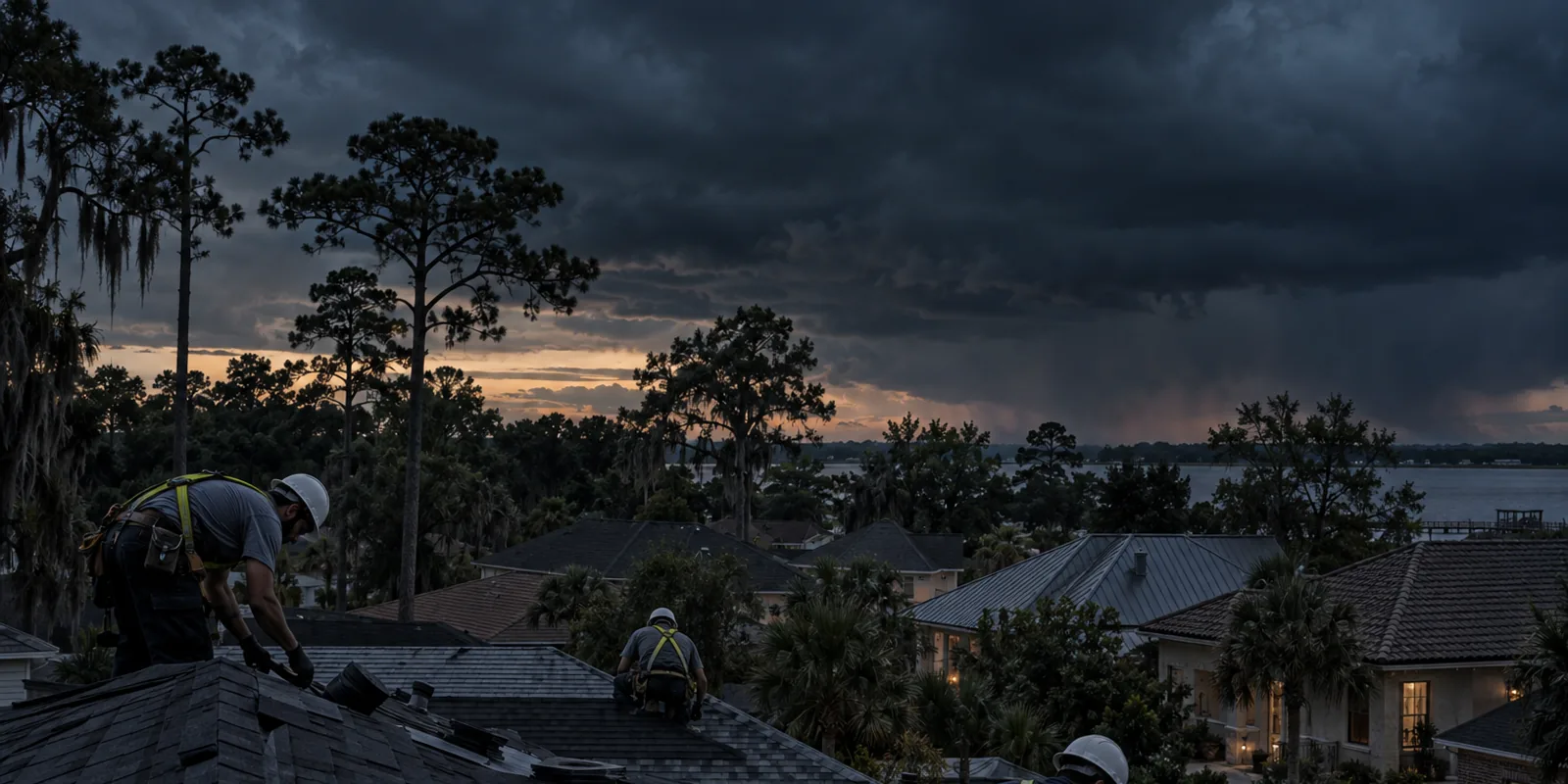
A roof leak in Jacksonville rarely announces itself politely. The first sign is usually a tan ring on a bedroom ceiling after an August thunderstorm, or water running down the inside of a window frame during a three-day nor’easter at the Beaches. By the time the stain is visible, water has been traveling through the attic for a while. This page covers how a leak is traced to its real entry point, where roofs across Duval County most often fail, what the repair involves, how humidity turns a small leak into a mold problem, and what your insurer will and will not look at.
Tracing a leak: attic first, then the roof
Water enters at one point and shows up at another. It slides down the underside of the plywood, follows a rafter, and drops wherever it meets a truss plate, a duct strap or a recessed light, sometimes ten feet downhill from the hole. Starting on the roof with a caulk gun is how a leak gets repaired three times. The roofer starts in the attic, with a flashlight, looking for the dark trail on the decking, wet or matted insulation, and rust on nail tips. That trail points to a specific strip of roof.
On the surface, that strip gets a slow inspection: every pipe boot, every exposed nail, the valley, any flashing, the shingle seal lines. When the entry point is still not certain, a water test settles it. A hose runs on one area at a time, low first and moving up, while someone inside watches. The stain darkens within minutes of the right spot being wetted. On a roof with more than one problem, this is the only way to know the repair covered the leak and not just a leak.
Where Jacksonville roofs leak
Pipe boot collars. The neoprene collar around plumbing vent pipes splits after eight to twelve years of Florida sun. It is the most common leak source in Duval County by a wide margin, and it typically shows as a stain near a bathroom or the kitchen. The fix is a new boot, or a lead or metal collar that outlasts the shingles.
Nail pops and blisters. Attic heat works nails up out of the decking, and the nail head lifts the shingle above it and punctures the one it sits in. Blisters on the shingle surface from heat and trapped moisture break open and shed granules. Both are common on the 1980s and 1990s roofs of Baymeadows, Mandarin and Argyle Forest.
Wind-lifted shingles and ridge caps. Thunderstorm downdrafts and tropical-storm gusts break the seal strip, and a shingle that has lifted once no longer lies flat. Ridge caps, rakes and eaves go first. The shingle roof repair page covers how lifted courses are resealed or replaced and matched.
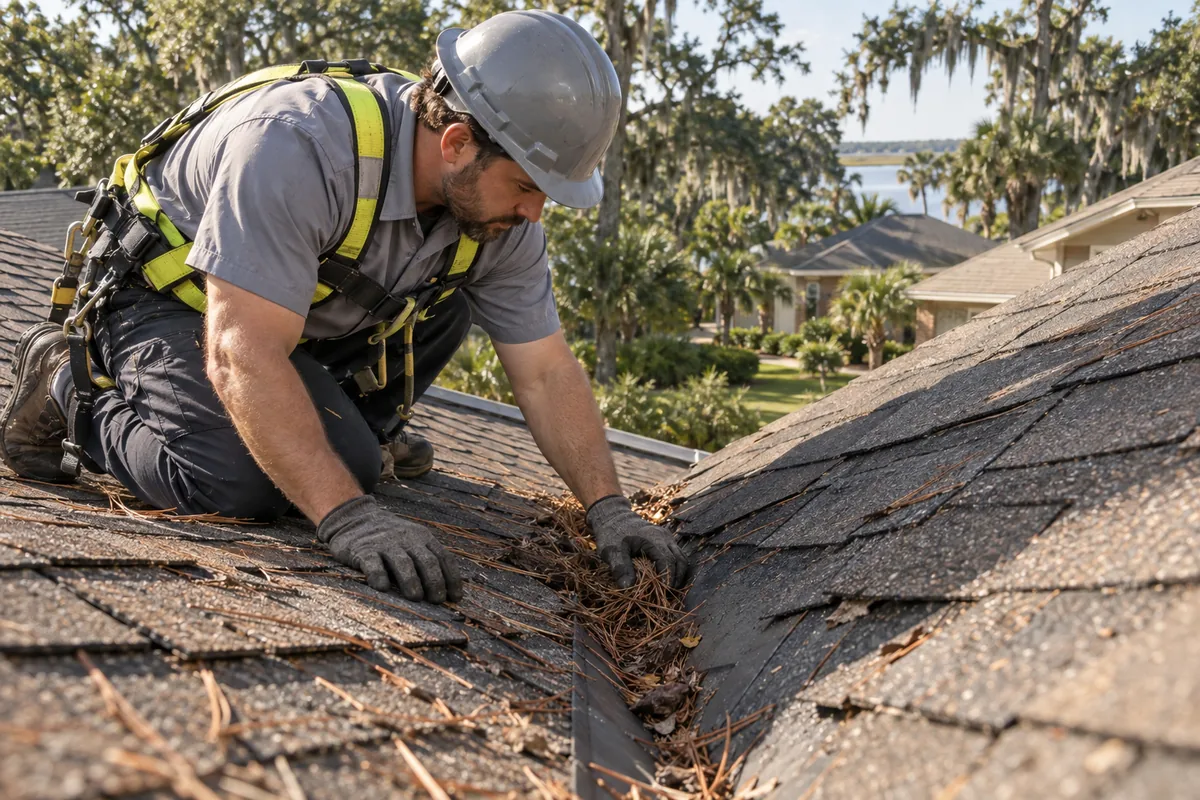
Valleys under pine needles. Live oaks and slash pines drop a mat of needles that packs into the valley and holds water against the shingles for days. The shingles rot from the top down, and in a downpour the valley overflows sideways under the neighboring courses. Fort Caroline, Ortega and the older streets of Mandarin have the tree cover for this.
Chimney and skylight flashing. Riverside, Avondale, Springfield and San Marco have brick chimneys from the 1920s with counterflashing that has pulled out of the mortar, and skylights added in the 1980s with perished perimeter seals. The stain shows beside the chimney or skylight, not under it.
Roof-to-wall flashing. Where a lower roof meets a second-story wall or an addition meets the main house, step flashing and kickout flashing keep water from running behind the siding. Missing kickouts are common on additions and rot the wall below.
Rust near the coast. Within a few miles of the Atlantic or along the Intracoastal, unpainted galvanized drip edge, vents and valley metal rust through from the underside. Jacksonville Beach, Atlantic Beach, Neptune Beach and Mayport homes need stainless or coated metal and fasteners on the repair.
Nor’easters, wind-driven rain and the northeast slope
Some leaks only appear in a particular kind of weather, and in Jacksonville that weather is a nor’easter. In fall and winter, a stalled system offshore sends two or three days of steady northeast wind and rain across the Beaches and up the St. Johns River. Rain is pushed uphill under shingle laps, ridge caps and step flashing on the slope facing the wind, and water that a normal rain would shed ends up in the attic. Summer thunderstorms do the same thing for twenty minutes at a time from whichever direction the downdraft hits. That is why a water test is run from the direction the weather comes from, and why a lifted lap on the northeast slope is worth resealing even when it has not leaked yet. The Beaches region page covers what salt air and onshore wind do to coastal roofs over time.
Leak detection: plumber or roofer?
Searches for leak detection in Jacksonville mostly land on plumbers, and that is the right trade for a slab leak, a pressurized supply line or a pool. A roofer finds roof leaks with an attic inspection, a surface inspection and a hose. The confusion is understandable when the stain is under a bathroom: a leaking shower pan and a cracked vent boot on the roof above it leave the same mark. The tell is timing. A roof leak grows after rain and disappears in a dry week. A plumbing leak does not care about the weather. If the moisture is not coming from the roof, the roofer says so and does not sell a repair.
What the repair actually involves
The repair matches the cause. A cracked boot is replaced, with the surrounding shingles lifted and re-laid rather than smeared with sealant. Popped nails are pulled, the hole sealed, and the shingle re-fastened a few inches over. Lifted shingles are resealed with roofing cement under each tab or replaced when the mat is brittle, and torn ridge caps are replaced. A valley is cleared, the rotted shingles along it removed, new valley metal or a woven valley installed, and the courses tied back in. Chimney counterflashing is cut into the mortar joint and sealed. Rusted drip edge and vents come off and coated or stainless replacements go on. Decking that is soft under the leak is cut out and new plywood set in.
Sealant has a place, at seams on metal flashing and around some penetrations, but a tube of caulk over a failed flashing is not a repair and will not last past the next summer. If the roofer finds that the boots, nail pops and lifted shingles are everywhere and not just in one spot, the honest report is that the roof is near the end of its life, and that conversation is had before money goes into patching.
Ceiling damage, mold and Jacksonville humidity
Jacksonville humidity turns a wet attic into a mold problem faster than most places. Saturated insulation and damp drywall can start growing mold within days in summer, so the interior side of a leak needs attention as soon as the roof is dry. Pull wet insulation out, run a fan or dehumidifier, and leave the drywall repair until the attic has dried completely. Lightly stained drywall is primed with a stain-blocking primer and repainted. Drywall that sagged, crumbled or held water gets cut out. If the wet area is large or has a smell, a mold remediation company should look before the ceiling is closed up.
Insurance: sudden damage versus wear
Florida homeowner policies generally cover sudden, accidental events: wind ripping shingles off, hail, a pine limb through the deck, and the interior damage those cause. They generally exclude wear and tear, which is what a cracked boot, a rusted valley or a clogged gutter is. The roofer photographs the cause and writes it up honestly, because claims built on the wrong story fail at adjustment and can cost you more than the repair. Florida now allows one year from the date of loss to file a claim, and a roofer cannot pay or waive your deductible. If the leak followed a storm, read the storm damage insurance claim guide before you call the carrier, and if water is actively coming in tonight, the emergency roof repair page explains tarping and honest arrival windows. Once the leak is fixed, a yearly look at boots, valleys and flashing through the maintenance and inspection service catches the next one before it reaches the ceiling.
What is included
- Attic inspection tracing the wet path on the underside of the deck and rafters back uphill to the section where water enters
- Hose water test one area at a time when the leak only shows in wind-driven rain or a nor'easter
- Replacement of cracked pipe boot collars, popped nails pulled and resealed, and blistered or wind-lifted shingles re-secured or swapped
- Valleys cleared of pine needles and re-flashed, chimney and skylight flashing repaired or rebuilt with new counterflashing
- Roof-to-wall step flashing and rusted drip edge or vents replaced with materials suited to salt air near the coast
- Emergency tarp or temporary dry-in when the permanent repair has to wait for dry weather or an insurer's inspection
- Photos of the cause and the finished repair, with an honest note on whether it was storm damage or wear
Signs you should call
- A brown ring or bubbling paint on a ceiling or wall that grows after each afternoon storm
- Water dripping from a ceiling light, fan or air conditioning register during rain
- Stains on the drywall below a bathroom vent, a plumbing stack or a chimney
- Damp insulation, dark streaks on the rafters or a musty smell in the attic
- Leaks that appear only when a northeast wind pushes rain onto one side of the house
- Shingle tabs or ridge caps lying in the yard after a windy night
- A ceiling that sags or feels soft, which needs draining before it comes down
If the ceiling is sagging, drain it before it falls
Drywall holding water can drop without warning. Keep people out from under it, switch off the breaker to any dripping light or fan, and poke a small hole with a screwdriver over a bucket to let the water out. Stay off the roof in rain; a wet shingle roof is slick and the roofer will tarp it. Photograph everything before cleanup if you may file a claim.
Frequently asked questions
How do you find where a roof is leaking in a Jacksonville home?
Water almost never drips straight below where it gets in. It runs down the underside of the decking or along a rafter and drops onto the drywall wherever it hits a nail, a truss plate or a duct. The roofer goes into the attic first, looks for stained plywood and wet insulation, and follows the trail uphill to a strip of roof. On the surface, every pipe boot, nail head, valley, flashing and shingle in that strip is checked. If the source is still not obvious, a hose test wets one area at a time while someone watches inside, and the entry point shows up within minutes.
Why does my roof only leak during a nor'easter or a windy storm?
Because the water is being pushed uphill under something rather than falling through a hole. Jacksonville nor'easters in fall and winter bring days of northeast wind that drive rain under shingle laps, ridge caps and step flashing on the windward slope, and the same happens in the downdrafts of a summer thunderstorm. The problem does not show in gentle rain at all. Homes at Jacksonville Beach, Atlantic Beach and along the Intracoastal see this most, but any house with a slope facing the ocean can. The roofer tests from the direction the weather comes from, and the repair often means resealing laps and replacing lifted shingles rather than patching one spot.
Is leak detection the same as roof leak repair?
Not quite. In Jacksonville, water leak detection usually means a plumber tracing a slab leak, a pressurized supply line or a pool leak with listening equipment. A roofer traces roof leaks by inspecting the attic, the roof surface and water testing suspect areas. If the stain is under a bathroom, both trades get called, because a leaking shower valve and a cracked vent boot on the roof above it can produce the same mark on the ceiling. A quick clue: a roof leak grows after rain and stays dry in a drought, while a plumbing leak does the opposite. The roofer will tell you if the moisture is not coming from the roof.
What are the most common sources of roof leaks in Jacksonville?
Cracked neoprene collars on pipe boots are the number one source across Duval County; the sun splits the rubber after 8 to 12 years. Next come nail pops, where a nail backs out of hot decking and lifts a shingle, and wind-lifted shingles and ridge caps that lose their seal. Valleys packed with pine needles hold water against the shingles. Chimney and skylight flashing on older Riverside and Avondale homes, roof-to-wall step flashing on additions, and rust on drip edge and vents within a few miles of the coast round out the list. Each has its own repair, and none of them is fixed by a tube of caulk.
Will homeowner insurance cover my roof leak?
Florida policies generally cover sudden, accidental damage such as wind tearing off shingles, hail, or a limb through the roof, plus the interior damage that follows. They generally exclude leaks from wear, age, rust, cracked boots and clogged valleys. Insurers ask for a roofer's photos and written report on the cause, and Florida law gives you one year from the date of loss to file. The roofer reports honestly on what caused the leak, storm or wear, because a claim built on the wrong story fails at adjustment. Read your own policy, and remember that a roofer cannot legally waive or pay your deductible.
Can the leak be fixed while it is still raining?
Usually not permanently. Shingle repairs, flashing work and sealants need a dry surface to bond, and a wet roof is dangerous to walk. During rain the roofer makes the house safe: a tarp over the affected slope, secured above the leak, and a look inside to drain a sagging ceiling. The permanent repair follows when the roof dries, which in a Jacksonville summer is often the next morning. Tarp work is priced separately on the estimate so you can see what the emergency step cost versus the repair itself. The emergency roof repair page explains how arrival windows work after a storm.
Should I fix the ceiling drywall before or after the roof repair?
After, and only once the attic has dried. Fresh paint over damp drywall stains again within weeks, and a patch done before the roof is fixed just gets soaked in the next thunderstorm. Jacksonville humidity means wet insulation and drywall grow mold quickly, often within days in summer, so pull out saturated insulation and run a fan or dehumidifier in the room. Lightly stained drywall can be coated with a stain-blocking primer and repainted; sagging or crumbling drywall needs to be cut out and replaced. The roofer's report notes the interior damage for your insurer if you are filing a claim.