
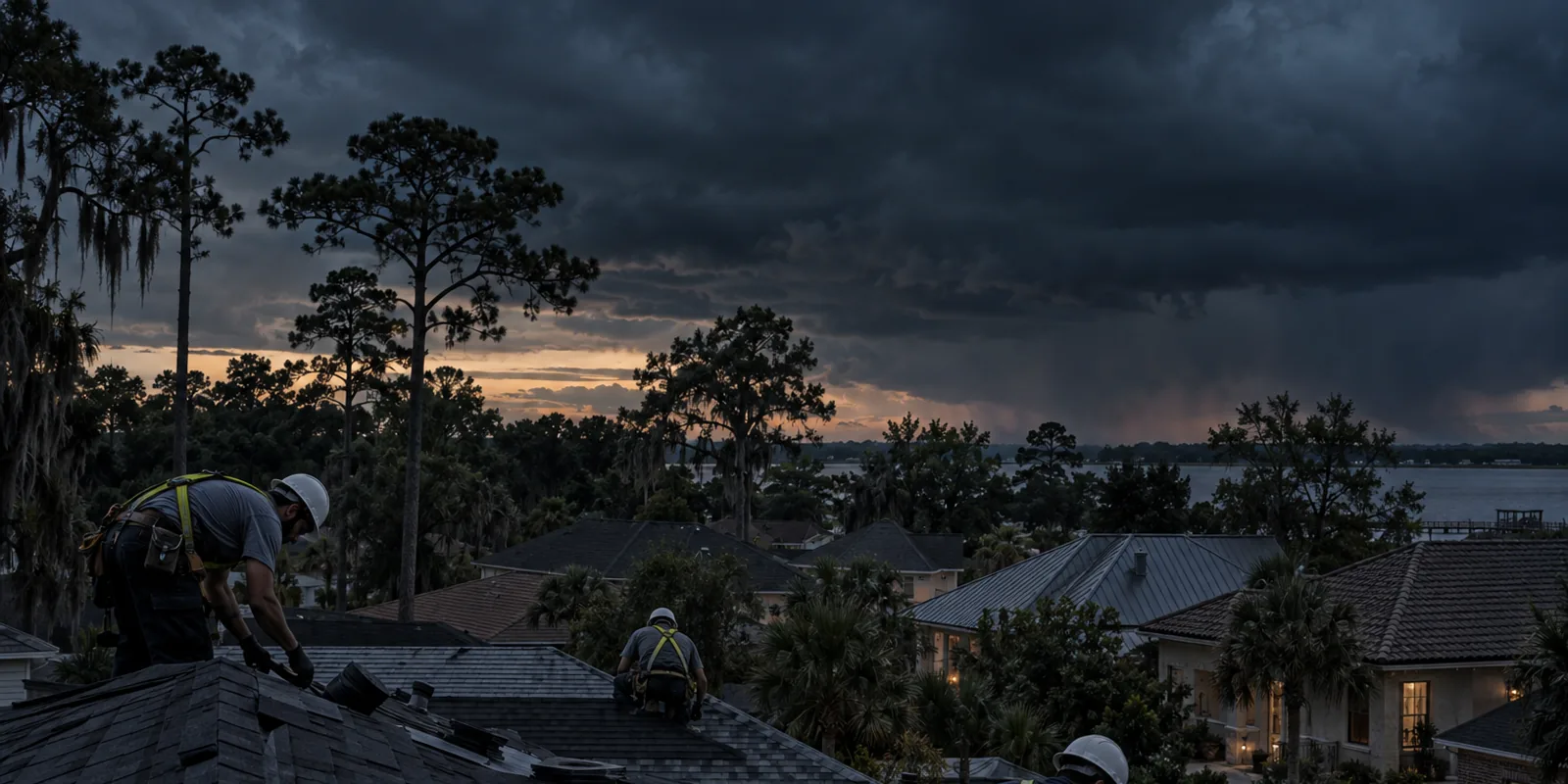
Jacksonville gets its roof emergencies in a pattern. From June 1 to November 30 the Atlantic hurricane season brings tropical storms up the coast and their outer bands across Duval County, with tornado spin-ups embedded in them. From June through September, almost every afternoon builds a thunderstorm over the St. Johns River with lightning, hail on occasion, and downdrafts that peel ridge caps. Fall and winter add nor’easters that push rain under shingles for days. This page explains what happens when you call with water coming in, what a make-safe tarp does and does not do, how to handle the first hour and the insurance claim, and how to keep the crews that follow every storm off your porch.
What a Jacksonville roof emergency looks like
Most calls fall into a few types. Wind uplift is the biggest: a squall line or a tropical-storm gust breaks the seal on shingles along the ridge, rakes and eaves and strips a band of them, leaving underlayment or bare deck exposed. Tornadoes spun off by tropical systems, like the ones that have tracked through Arlington and the Northside, take whole sections and drop trees. Limbs from live oaks and pines punch through decking, a common outcome in Ortega, Fort Caroline and the older streets of Mandarin. Hail, occasional and mostly in spring, bruises shingles and dents vents without necessarily causing a leak that day. And every named storm produces the slow emergency: a leak that starts on day two of soaking rain bands when water finally finds the lifted lap or the cracked boot that was already there.
Tarp and dry-in first: the make-safe step
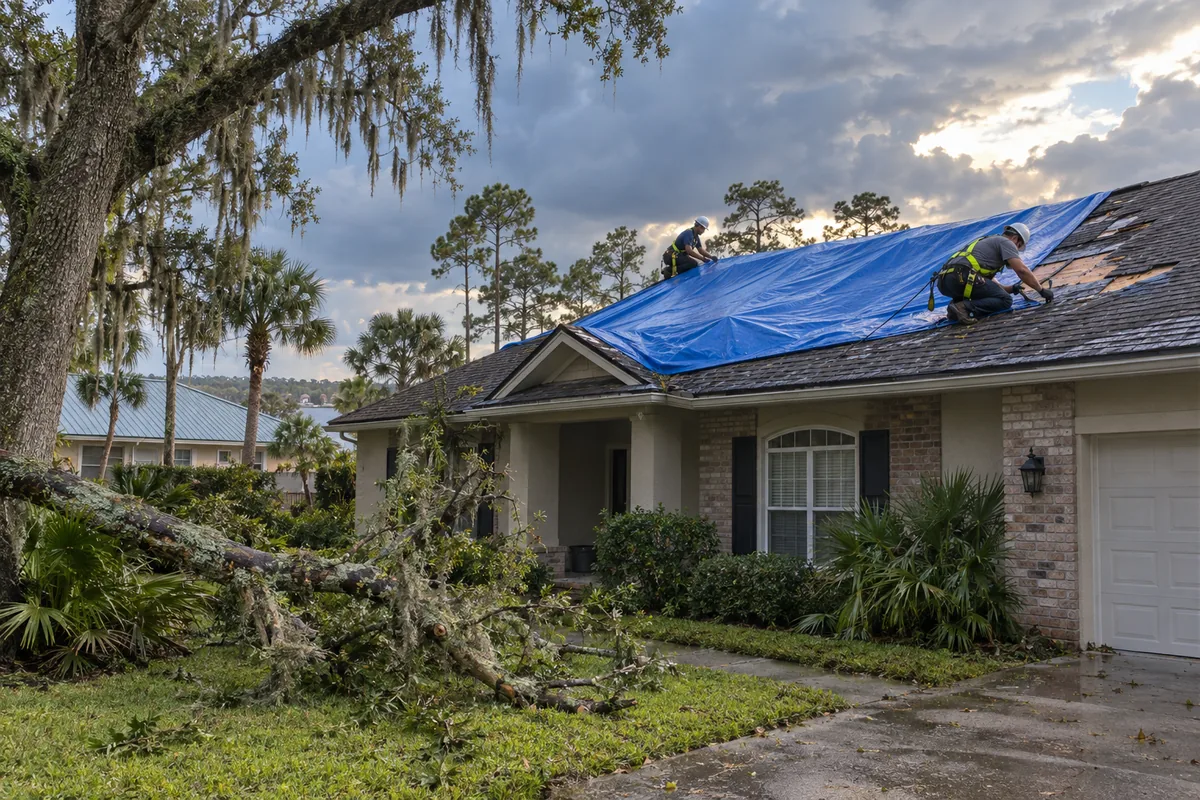
When water is coming into the house, the first job is to stop it, not to write a replacement contract. Once the wind and lightning have passed and the roof can be walked, the roofer clears loose debris, pulls the limb if one is there, and covers the damaged section. On a small area of missing shingles that means a peel-and-stick membrane over the exposed deck, which is a proper dry-in and can stay until the repair. On a large or torn area it means a heavy tarp run from the ridge over the damage and down past the eave, secured with furring strips and nails into solid wood, not just weighted with sandbags that blow off in the next gust. A puncture from a limb gets a plywood patch under the tarp.
A tarp is temporary. Florida sun breaks the fabric down in a couple of months, and a loose tarp can do more damage flapping than the hole it covers. The estimate lists the make-safe work as its own line so you and your insurer can see what the emergency step cost, separate from the permanent repair.
An honest arrival window
Jacksonville covers roughly 875 square miles, and after a hurricane every roofer in Duval County is working a list that runs from the Beaches to Oceanway. Nobody can promise a crew in an hour across that, and any company that does is either not coming or is a storm-chasing outfit that will be gone by spring. What you get here is a real window given when you call, based on where you are and what else is on the board, and a call back if it moves. On an ordinary thunderstorm day the wait is short. In the days after a named storm it may mean a day or two, with tarps prioritized for homes with water actively coming in over those with a few missing shingles and a dry attic.
The first hour: what to do before the roofer arrives
Stay off the roof. Wet shingles are slick, gusts keep coming after the rain stops, and lightning does not care that the storm looks finished. Inside, move furniture and electronics out from under the leak, put buckets down, and cut the breaker to any light fixture or ceiling fan that is dripping. A ceiling that is bulging with water can come down; drain it with a small hole from a screwdriver over a bucket rather than waiting.
Then photograph everything. The ceiling, the wet floor, the shingles in the yard, the limb, the roof from the ground on every side you can see. Take the pictures before you clean up, because the adjuster will want to see the loss as it happened. If a tree is on the house or a line is down, keep clear of both and call the power utility about the line before anyone touches the tree. Save receipts for tarps, fans or anything else you buy to protect the house, since policies generally reimburse reasonable make-safe spending. If the water is coming from a single spot and the roof is otherwise intact, the roof leak repair page covers how that source is traced once the weather clears.
Photos, reports and the insurance claim
The roofer’s first visit produces the record your claim runs on: dated photos of each slope, the interior damage, and a short written report that says what the storm did and what was already worn. That distinction matters. Wind-creased shingles and a limb through the deck are storm damage. Cracked pipe boots, algae streaks and bald 3-tab shingles on a 1990s Baymeadows roof are wear, and a report that calls wear storm damage gets the whole claim denied at adjustment. Honest documentation is what gets the storm portion paid.
Florida now gives one year from the date of loss to file a claim and 18 months for a supplemental claim. The clock starts on the storm date, so report damage promptly even if it seems small. The hurricane and storm damage claim guide walks through the call to the carrier, the adjuster visit and what to expect from the estimate comparison.
Storm chasers, deductibles and AOB
Within days of any tropical system, pickup trucks with out-of-state plates work the subdivisions of Argyle Forest, Oceanway and the Beaches, knocking doors with free inspections and offers to cover your deductible. Florida statute 489.147 makes it illegal for a roofer to pay, waive or rebate your deductible, and assignment of benefits for roofing work has largely been eliminated, so a form that signs your claim over to a contractor should stay unsigned. The roofer here does not door-knock, does not ask you to sign at the porch, and does not need your claim in its name to put a tarp on. Check any company’s Certified Roofing Contractor license, which starts with CCC, at myfloridalicense.com, ask where the office is, and get every number in writing.
From make-safe to permanent repair
Once the house is dry and the adjuster has seen the roof, or you have decided to pay out of pocket, the permanent repair is scheduled. For a few lifted or missing shingles that means new shingles matched as closely as possible, sealed and nailed six per shingle, and a check of the ridge caps and the rest of that slope for lifted laps that have not leaked yet. A punctured deck gets new plywood nailed with ring-shanks, new underlayment and shingles tied into the surrounding courses. Rusted or bent vents and dented drip edge are replaced.
Sometimes the honest answer is replacement. A 20-year-old 3-tab roof that lost a slope will not accept new shingles well, because the old ones are too brittle to seal against. And depending on the roof’s permit date, the 25 percent rule may apply: roofs under the 2007 Florida Building Code or later can be repaired regardless of the extent under SB 4-D, while older roofs with heavy damage to one section may need to come up to current code. The roof replacement page explains what that involves and how the permit runs through the City of Jacksonville or the Beaches building departments. Either way, both options are written up with reasons and the decision is yours. After the repair, the yard is swept for nails, the gutters are cleared of storm debris, and the photos of the finished work go into the same folder as the damage photos, which is what closes the claim. Coastal homes in Atlantic Beach and the rest of the Beaches get the same repair with stainless or coated metal, since salt air will rust a plain galvanized replacement within a few seasons.
What is included
- Emergency tarping or a peel-and-stick dry-in over the damaged section as soon as it is safe to be on the roof
- Removal of fallen limbs and loose debris from the roof, and a check of the deck under any puncture
- Photos and a written damage report distinguishing storm damage from pre-existing wear, for your insurance claim
- Wind-lifted shingles, torn ridge caps and missing rake or eave courses replaced and resealed
- Hail-bruised shingles, dented vents and cracked skylights assessed and documented slope by slope
- Permanent repair or, when the damage warrants it, a replacement estimate under the current Florida Building Code
- Permit pulled with the City of Jacksonville or the Beaches city when the repair scope requires one
Signs you should call
- Water is dripping or running into the house right now, during or after a storm
- Shingles, ridge caps or pieces of metal roofing are on the lawn or in the pool
- A tree limb has come through or is resting on the roof
- Daylight is visible through the attic after a tornado warning or a squall line
- A tarp put up by a neighbor or a door-knocking crew is flapping or already leaking
- Your insurer or adjuster asked for a roofer's report and photos before the claim moves
Stay off the roof during and right after the storm
Wet shingles, gusts and lightning injure people every hurricane season in Florida. Do not climb up to tarp it yourself. Inside, move belongings, catch water in buckets, cut power to any fixture that is dripping, and drain a sagging ceiling with a small hole over a bucket. If a tree is on the roof or power lines are down, keep clear and call the power utility about the lines first.
Frequently asked questions
How fast can a roofer get to my house in an emergency?
It depends on the storm. On a normal afternoon thunderstorm day, the tarp goes up as soon as the rain and lightning pass and a crew is free, and you are told when that will be. After a named storm or a tornado outbreak that hits a whole area like Arlington or the Beaches at once, every roofer in Duval County is working a list, and the honest answer is a window of hours to a day or two, given to you when you call and updated if it slips. Any company promising a crew in 30 or 60 minutes across a city the size of Jacksonville is telling you what you want to hear.
What should I do in the first hour after storm damage?
Get everyone out from under a sagging ceiling, put buckets under drips, and move furniture and electronics. Cut the breaker to any light or fan that is dripping. Drain a bulging ceiling with a small hole over a bucket before it falls. Photograph the interior damage, the yard, and the roof from the ground before anything is cleaned up. Then call a roofer for a tarp and call your insurer to open the claim. Do not go on the roof, do not sign anything a door-knocking crew hands you, and keep receipts for anything you buy to protect the house, because policies generally reimburse reasonable make-safe costs.
Is tarping a permanent repair?
No. A tarp or a peel-and-stick dry-in is a make-safe step that stops water for days or a few weeks while the insurer inspects and the permanent repair is scheduled. Tarps flap loose in the next storm, degrade in Florida sun within a couple of months, and can trap moisture against the deck. The estimate lists the make-safe work and the permanent repair as separate line items so you and the adjuster can see both. A tarp that has been up since last hurricane season is a sign the repair was never finished, and the deck under it is usually worse than when it went up.
What does hail and wind damage look like on a Jacksonville roof?
Wind damage shows as lifted or creased shingles along the ridge, rakes and eaves, missing tabs, and ridge caps torn loose, usually on the slope that faced the storm. Hail, which is occasional here in spring, leaves round bruises in the shingle mat that feel soft, granule loss in a random pattern, and dents on soft metal like gutters, vents and the air conditioning fins. The roofer maps the hits per slope, because adjusters count them. Blistering from heat, algae streaks and worn 3-tab edges are not storm damage, and an honest report says so rather than inflating a claim that will be denied.
How do I avoid storm chasers after a hurricane?
After every tropical system, crews from out of state drive Jacksonville subdivisions knocking doors and offering free inspections or a free roof for your deductible. In Florida a roofer cannot pay, waive or absorb your deductible under statute 489.147, and assignment of benefits for roofing has largely been eliminated, so a form that hands your claim to the contractor should not be signed. Verify any company's CCC license at myfloridalicense.com, ask for a local address and a written estimate, and call your insurer yourself. A legitimate roofer does not need your signature on the porch to put a tarp on.
How long do I have to file a hurricane damage claim in Florida?
Florida law now gives you one year from the date of loss to file a new claim, and 18 months for a supplemental claim, which is much shorter than it used to be. That clock starts on the day of the storm, not the day you noticed the leak. Photograph and report damage promptly even if it seems minor, because wind-lifted shingles that were sealed down in September can be the reason for a leak in a February nor'easter, and by then the claim may be harder to tie to the storm. The roofer's dated photos and report from the first visit are what connect the two.
Should the storm damage be repaired or is the roof a replacement now?
It depends on how much of the roof was damaged, its age, and which code rule applies. A roof under the 2007 Florida Building Code or later can be repaired regardless of how much was hit, thanks to SB 4-D. An older roof that lost more than a quarter of a section may have to be brought to current code, which often means replacement. A 20-year-old 3-tab roof that lost a slope in a storm is usually replaced, because new shingles will not seal to brittle old ones. The roofer writes up both options with reasons, and the choice stays yours.