
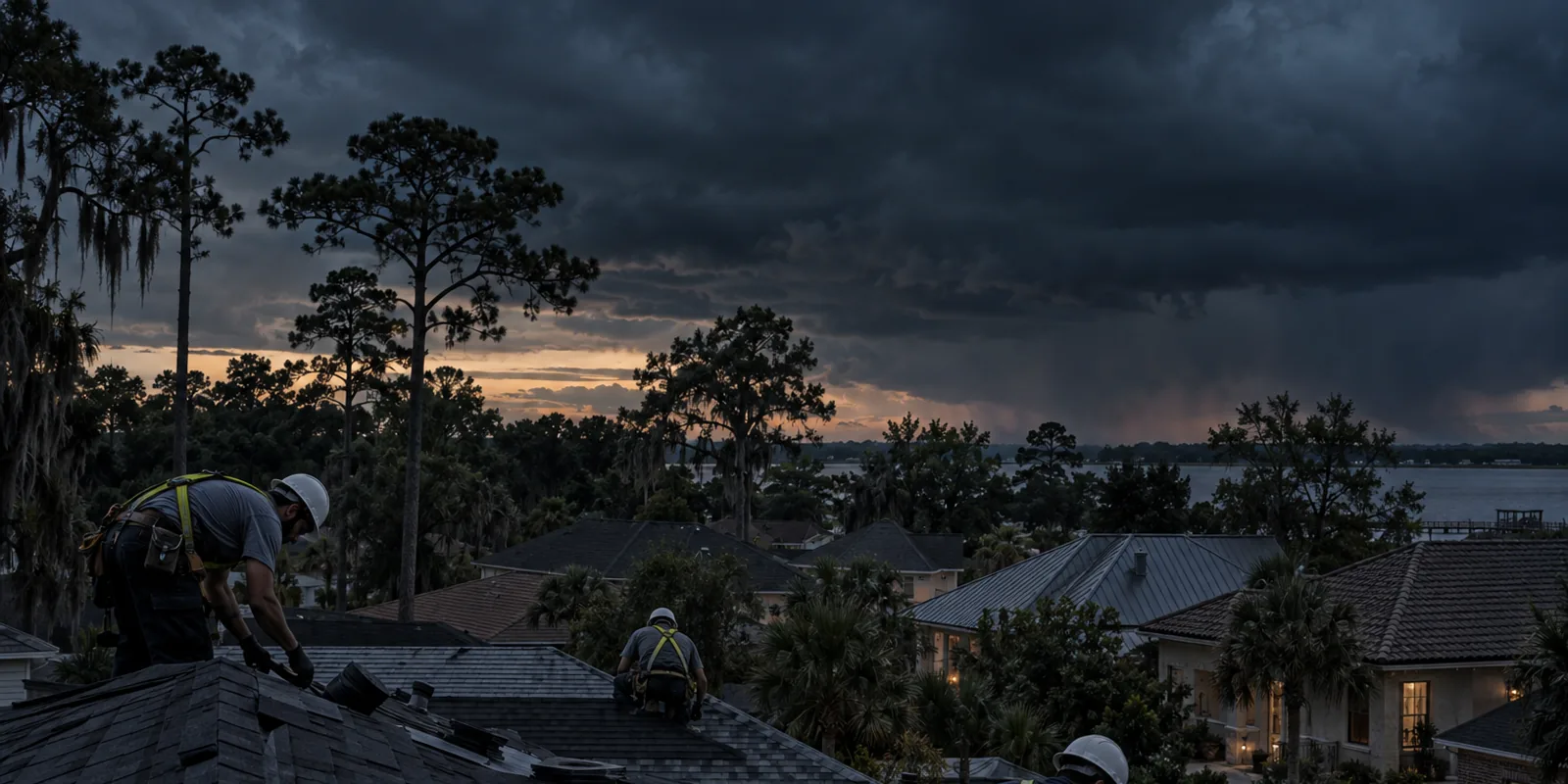
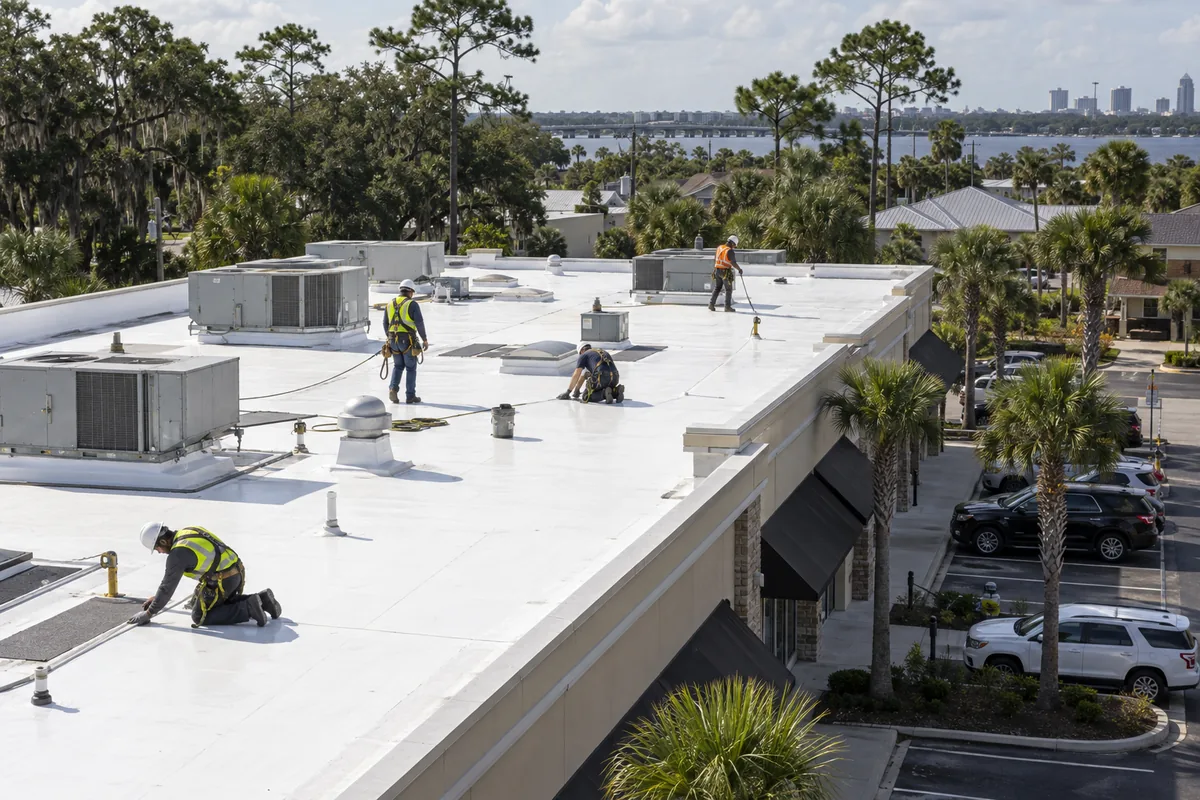
The commercial roofs of Jacksonville are mostly flat, mostly out of sight, and mostly ignored until a tenant calls about a ceiling tile. Office parks along Baymeadows Road and Southside Boulevard, strip centers on Beach Boulevard, Atlantic Boulevard and Blanding Boulevard, and the warehouses off I-295 on the Westside and out toward the airport on the Northside all sit under TPO, modified bitumen, built-up or metal roofs that take a beating from Florida sun, afternoon storms and hurricane season. This page covers the systems in use across Duval County, how leaks and ponding are handled, what rooftop equipment does to a roof, how work is coordinated with property managers and tenants, and what the code and permit side looks like.
The roof systems on Jacksonville commercial buildings
TPO is the white single-ply membrane on most buildings put up or re-roofed since the 2000s. It reflects heat, which matters in a city with summer highs in the low 90s, and its seams are heat welded. Its weak points are seams welded badly on the original install, punctures from foot traffic and dropped tools, and flashing at curbs. Modified bitumen, the granulated asphalt roll roofing on many 1990s strip malls and smaller office buildings, is tough underfoot and repairs well with matching plies. Built-up roofing, the layered tar-and-gravel system on older Southside office parks and Arlington retail, is reaching the end of its life across the city; blisters, bare spots and alligatoring in the flood coat are the usual signs. Metal, either standing seam or screw-down R-panel, covers most warehouses and distribution buildings on the Westside and Northside, and its problems are fastener gaskets, panel end laps and rust where the salt air reaches. The flat roof repair page goes deeper on membrane repairs, and the metal roofing page on panels and fasteners.
Low-slope drainage and ponding
A low-slope roof is not flat; it is supposed to fall toward interior drains or edge scuppers and be dry within about 48 hours of rain. When it is not, the problem is usually one of four things: drains and scuppers blocked by leaves and roofing debris, insulation that has compressed under foot traffic, a deck that has deflected over decades, or a rooftop unit that was set down where it dams the flow. Ponding water is heavy, grows algae that eats the membrane, concentrates UV, and pushes water through any seam defect it sits over. Nearly every manufacturer warranty excludes it. The fix depends on the cause: clearing and screening drains, adding a drain or scupper, installing tapered insulation to build slope, or crickets behind HVAC curbs to divert water around them. After 50-plus inches of rain a year, mostly in summer downpours, a roof that drains well outlasts one that does not by years.
Rooftop HVAC, curbs and penetrations
Most commercial roof leaks in Jacksonville start at something that was added to the roof: a package unit on a curb, a new exhaust fan, conduit for a rooftop sign or antenna, a gas line, a satellite dish. Mechanical and electrical contractors set the equipment and often leave the flashing to whoever notices later. Curbs need membrane run up the sides and capped under the unit flange; pipes need boots or pitch pockets filled and sealed; conduit should be on stands, not lying on the membrane where it abrades it. A leak that started a month after a new HVAC unit went in is almost always at the curb or at the condensate line. The roofer flashes the penetration properly, adds walkway pads on the service path so technicians stop wearing a track into the membrane, and documents it for the equipment contractor if the damage was theirs.
Commercial roof leak repair
Finding a leak on a 40,000 square foot roof starts with the tenant. The report says which ceiling tile, which office, which rack in the warehouse. That point goes on the roof plan against the column grid, and the roofer works the zone uphill of it, because water on a flat roof travels along the deck and through wet insulation before it drips. Seams, flashings, curbs and drains in that zone are inspected and probed. Where the leak is stubborn, sections are flooded or hosed in turn while someone watches below, and on a large roof an infrared scan at dusk shows wet insulation as warm patches. The repair covers both the entry point and the wet insulation, which is cut out and replaced, otherwise the roof keeps leaking from moisture already inside it. TPO gets a heat-welded patch, modified bitumen a torch or cold-applied ply, built-up a cut-and-fill with a new flood coat, metal new fasteners and lap sealant. A tenant with inventory under the drip gets a temporary diversion the same day when possible; the emergency roof repair page covers how storm calls are triaged.
Working with property managers and tenants
Commercial work runs through a property manager more often than an owner, and the roofer works the way managers need: one contact, a survey report per building, estimates that separate must-do repairs from should-do improvements, and scheduling that respects tenant hours. Retail centers on Beach Boulevard and Atlantic Boulevard are worked bay by bay so no storefront loses its entrance. Medical offices around the Mayo Clinic corridor and Baymeadows get odor and noise windows agreed in advance. Warehouses on the Westside are staged so the loading dock stays open. Torch work gets a fire watch and a written notice to tenants. Every job closes with photos and a short report that the manager can forward to the owner, the lender or the insurer without editing. The Southside region page and the Westside region page show which parts of the city the commercial work covers.
Maintenance plans built around hurricane season
A commercial roof is a capital asset that quietly loses value every year it goes unlooked at. A maintenance plan puts a roofer on it twice a year, in late spring before June 1 and again in winter after November 30, plus a visit after any named storm. Each visit clears drains and scuppers, checks seams and flashings, reseals pitch pockets and small defects, tightens or replaces metal fasteners, and photographs the roof with dates. The report supports manufacturer warranty claims, which usually require documented maintenance, and gives the owner a defensible answer when the insurer asks about roof condition at renewal. It also turns a replacement into a planned line item instead of a surprise. The maintenance and inspection page covers how the plan is set up for a single building or a portfolio.
Code, permits and Florida product approvals
Commercial re-covers, replacements and any repair beyond minor patching need a permit from the City of Jacksonville Building Inspection Division, since the city and Duval County are one government; Jacksonville Beach, Atlantic Beach and Neptune Beach permit their own. The Florida Building Code limits how many roof covers can remain on a building, so whether a new membrane can go over the old one depends on what the survey finds: the number of existing layers, the condition of the insulation, and the deck. Every assembly installed, from insulation and fasteners to membrane and edge metal, carries a Florida Product Approval or a Miami-Dade NOA, and the permit lists those numbers. Edge metal and parapet caps are tested for wind uplift, which matters in Jacksonville’s 130-plus mph coastal design wind region. The roofer holds a Florida DBPR Certified Roofing Contractor license with the CCC prefix, pulls the permit in the company name, and hands the owner the closeout paperwork for the building file. Before signing any contract, the guide to choosing a roofing company lists what to verify.
What is included
- Roof survey with a written condition report, photos and a roof plan marking every defect, drain and penetration
- Leak repair on TPO, PVC, EPDM, modified bitumen, built-up and standing seam or screw-down metal roofs
- Seam re-welding, membrane patches, flashing rebuilds at parapets, curbs and pipe penetrations
- Ponding corrected with added drains, scuppers, tapered insulation or crickets behind rooftop units
- HVAC curb, exhaust fan and conduit penetrations flashed and sealed after mechanical contractors finish
- Full re-cover or replacement with Florida Product Approved systems, permitted with the City of Jacksonville
- Scheduled maintenance plans with semiannual inspections timed before and after hurricane season
- Coordination with property managers and tenants on access, hours, noise and loading dock use
Signs you should call
- A tenant reports a drip, a stained ceiling tile or water on the floor after a thunderstorm
- Water still standing on the roof 48 hours after rain, or green growth around a drain
- Membrane seams lifting, blisters, or a surface that feels spongy when walked near a unit
- A new rooftop HVAC unit or antenna was installed and leaks started shortly after
- Rust streaks, loose screws or lifted panel edges on a metal warehouse roof
- The building is being sold, refinanced or re-insured and the lender wants a roof report
- The roof is past 15 years and there is no maintenance record to show the insurer
Keep tenants and maintenance staff off a ponded roof
Standing water hides soft, wet insulation that can give way, and rooftop electrical disconnects near ponding are a shock hazard. Do not let a tenant's handyman patch a membrane with hardware-store caulk; it voids most system warranties. Report the leak, mark the spot inside, and let a licensed roofer handle the roof.
Frequently asked questions
Which commercial roof types do you work on in Jacksonville?
Most commercial buildings in Duval County have a low-slope roof covered with TPO, modified bitumen or an older built-up tar-and-gravel system, and many warehouses on the Westside and Northside have screw-down metal. The roofer repairs and replaces all of them, plus PVC and EPDM where they turn up on older buildings. Each system has its own repair method: heat-welded patches on TPO, torch or cold-applied plies on modified bitumen, flood coats and gravel on built-up, and fastener and seam work on metal. The survey identifies what is on the roof, how many layers are there, and whether the insulation is dry before any repair is priced.
Why does my flat roof hold water and does it matter?
Low-slope roofs are designed to drain within about 48 hours of rain. Water that stays longer, called ponding, usually means a clogged drain or scupper, insulation that has compressed, a deck that deflected over time, or a rooftop unit set where it blocks flow. It matters because standing water adds weight, breeds algae that degrades the membrane, magnifies UV, and finds every pinhole in a seam. Most manufacturer warranties exclude ponding damage. Fixes range from clearing and adding drains to tapered insulation crickets behind HVAC curbs, and the survey identifies which one the roof needs.
Can repairs be done without shutting down tenants?
Almost always. Membrane patches, seam welds, flashing rebuilds and drain work are done from the roof with little impact inside, and the roofer coordinates with the property manager on staging, parking, loading dock access and working hours. Torch-applied work needs a fire watch and advance notice to tenants, and re-covers on strip malls along Beach Boulevard or Atlantic Boulevard are usually sequenced bay by bay so no single storefront loses its entrance for long. Tenants are told what to expect, when, and who to call if a drip appears mid-job. Noise and odor windows are scheduled around restaurants and medical offices.
Does commercial roof work in Jacksonville require a permit?
Re-covers, replacements and most repairs beyond minor patching require a permit from the City of Jacksonville Building Inspection Division, and the Beaches cities issue their own. The Florida Building Code limits the number of roof covers that can stay on a building, so a re-cover over an existing membrane depends on what the survey finds underneath. Every system installed carries a Florida Product Approval for the assembly, including insulation, fasteners and membrane, and the permit application lists the approval numbers. The licensed roofer pulls the permit, schedules inspections, and gives the owner the closeout documents for the building file and the insurer.
What does a commercial roof maintenance plan include?
A written plan with inspections twice a year, typically in late spring before hurricane season and again in winter after it, plus a visit after any named storm. Each visit clears drains and scuppers, checks seams, flashings, curbs and pitch pockets, reseals small defects before they open, and documents the roof with dated photos. Property managers get a report per building that supports warranty claims, insurance renewals and capital planning. Most manufacturer warranties on TPO and modified bitumen require documented maintenance to stay valid, and a plan costs far less than an emergency call when a tenant's inventory is under a drip.
How do you find a leak on a large flat roof?
By working from the inside out. The tenant's report gives a location, which is transferred to the roof plan with the building's column grid. Water on a flat roof travels along the top of the deck or through wet insulation, so the entry point can be well uphill of the stain. The roofer inspects seams, flashings and penetrations in that zone, probes the insulation for wet spots, and on a stubborn leak floods or hose tests sections in turn. Infrared scanning at dusk shows wet insulation as warm patches on larger roofs. The repair covers the entry point and the wet insulation, not just the spot above the drip.
How long do commercial roofs last in the Jacksonville climate?
It depends on the system, the drainage and the maintenance. A well-installed and maintained TPO or modified bitumen roof in Duval County commonly reaches 20 years or more, while one with chronic ponding and no maintenance can fail in half that. Built-up roofs from the 1980s are reaching the end of their life across the Southside office parks. Standing seam metal on warehouses lasts longer, though exposed fasteners on screw-down panels need replacement gaskets over time and salt air near the Intracoastal shortens all of it. Florida UV and afternoon storms are hard on membranes, which is why the semiannual inspection matters more here than in a northern city.