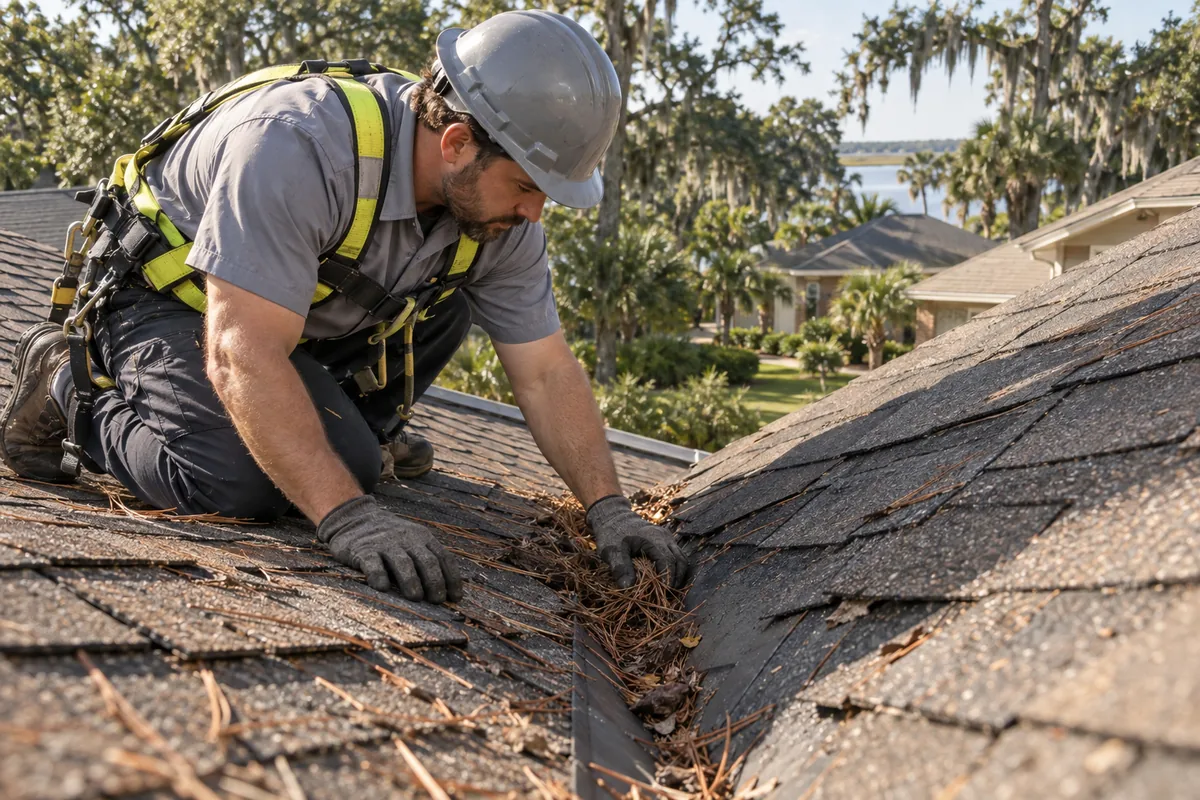
 Roof Leak Repair
 Roof Leak Repair
Leaks traced from the stain to the source: pipe boots, nail pops, lifted shingles, valleys, chimney and wall flashing, coastal rust.

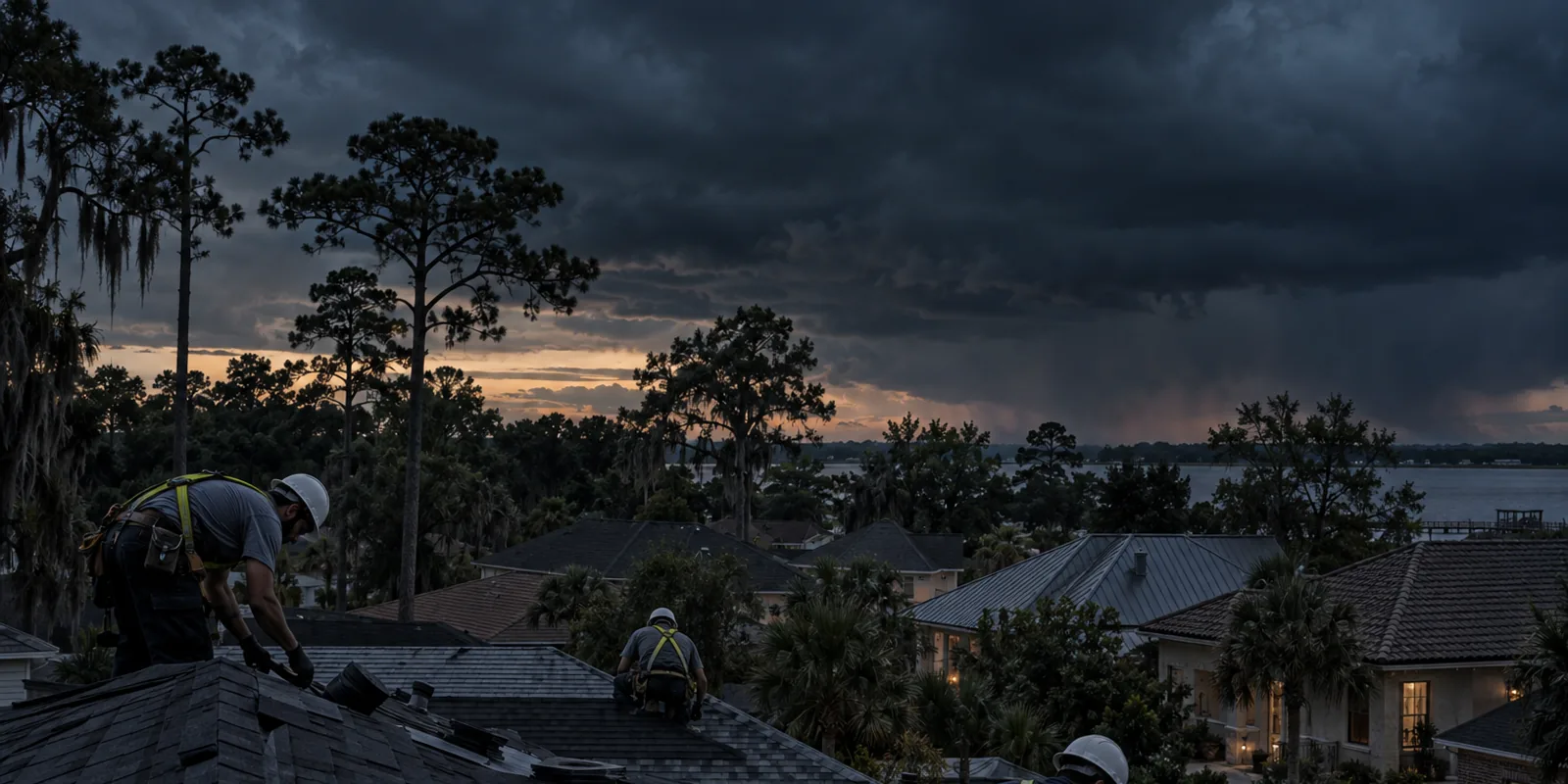
One licensed roofing team for the leak that arrived with an afternoon thunderstorm and the twenty-year-old shingle roof the insurer is asking about. Repairs, replacement, storm work, commercial roofs and inspections across Duval County and the Beaches.
Roof Repair JAX covers the roofing jobs Jacksonville owners call about most: water through the ceiling after a summer storm, shingles lifted by a nor'easter, a pipe boot that finally cracked, a flat roof that ponds, and the bigger decisions about replacing a roof that is past patching or that the insurance company will no longer accept. Every job is done by a roofing contractor licensed by the Florida DBPR, inspected first and priced in writing.
Roof Leak Repair Leaks traced from the stain to the source: pipe boots, nail pops, lifted shingles, valleys, chimney and wall flashing, coastal rust.
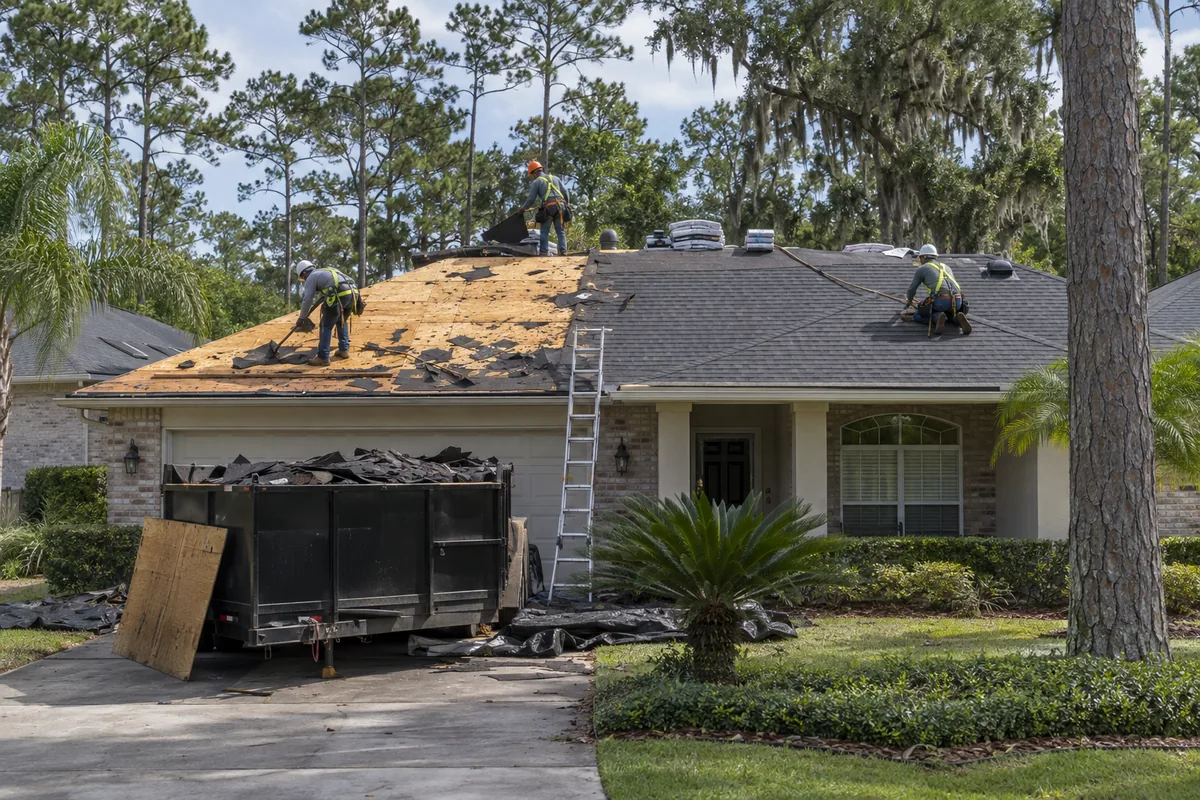 Roof Replacement
 Full tear-off replacement with new decking where needed, sealed underlayment, drip edge and your choice of shingles, metal or tile.
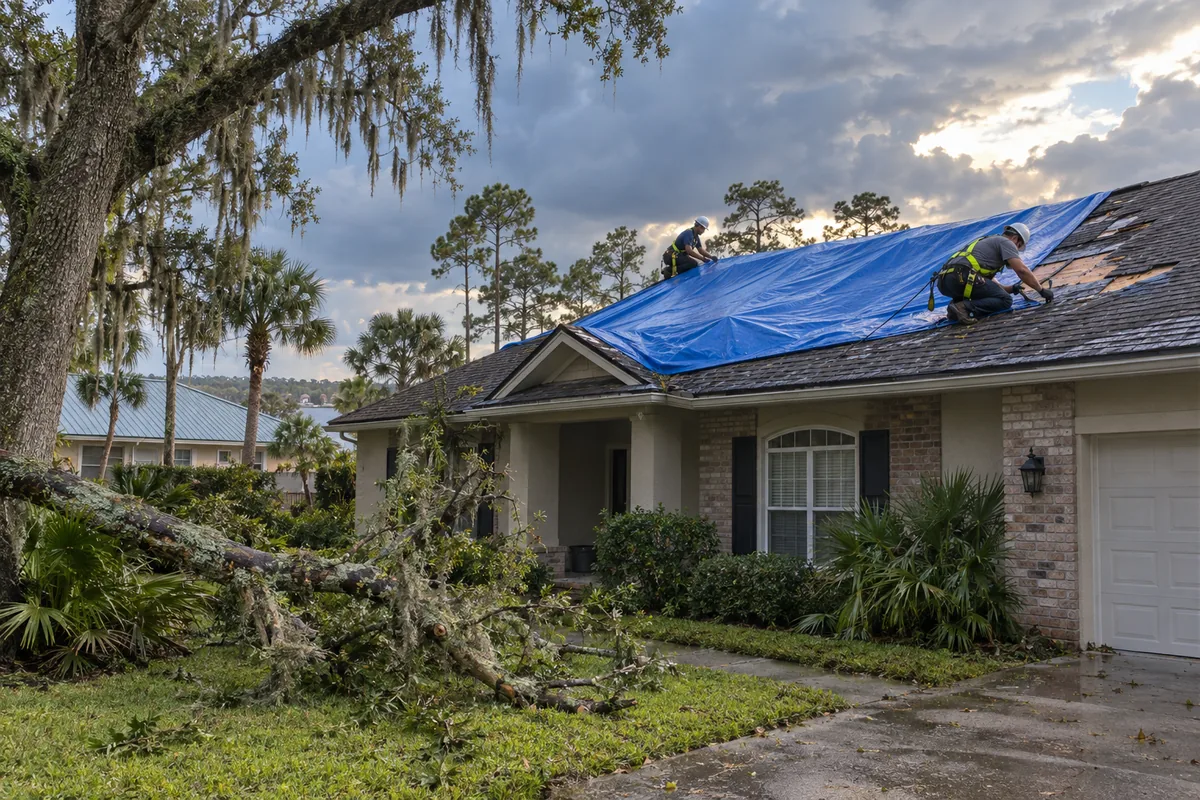 Emergency & Storm Repair
 Storm, wind and hail damage made safe with a tarp or dry-in, documented for your claim, then repaired permanently by a licensed roofer.
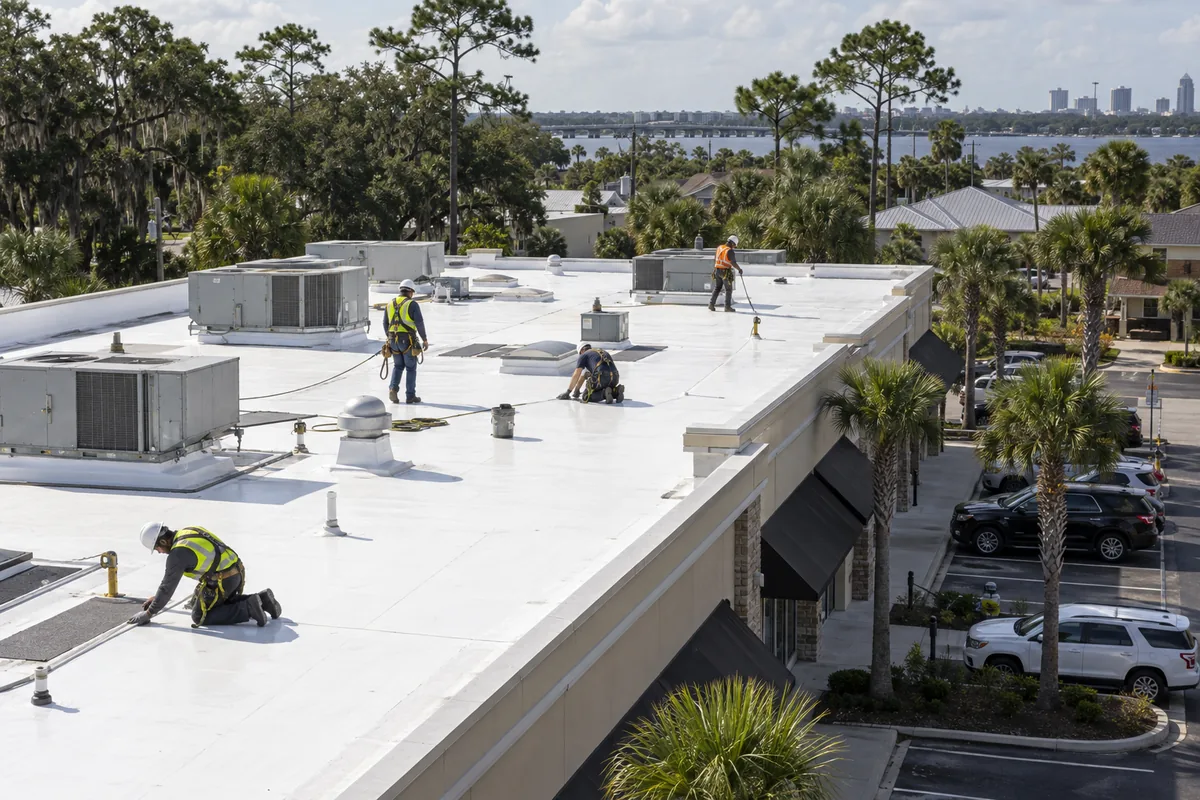 Commercial Roofing
 TPO, modified bitumen, built-up and metal roofs on Jacksonville offices, strip malls and warehouses: leak repair, ponding and maintenance.
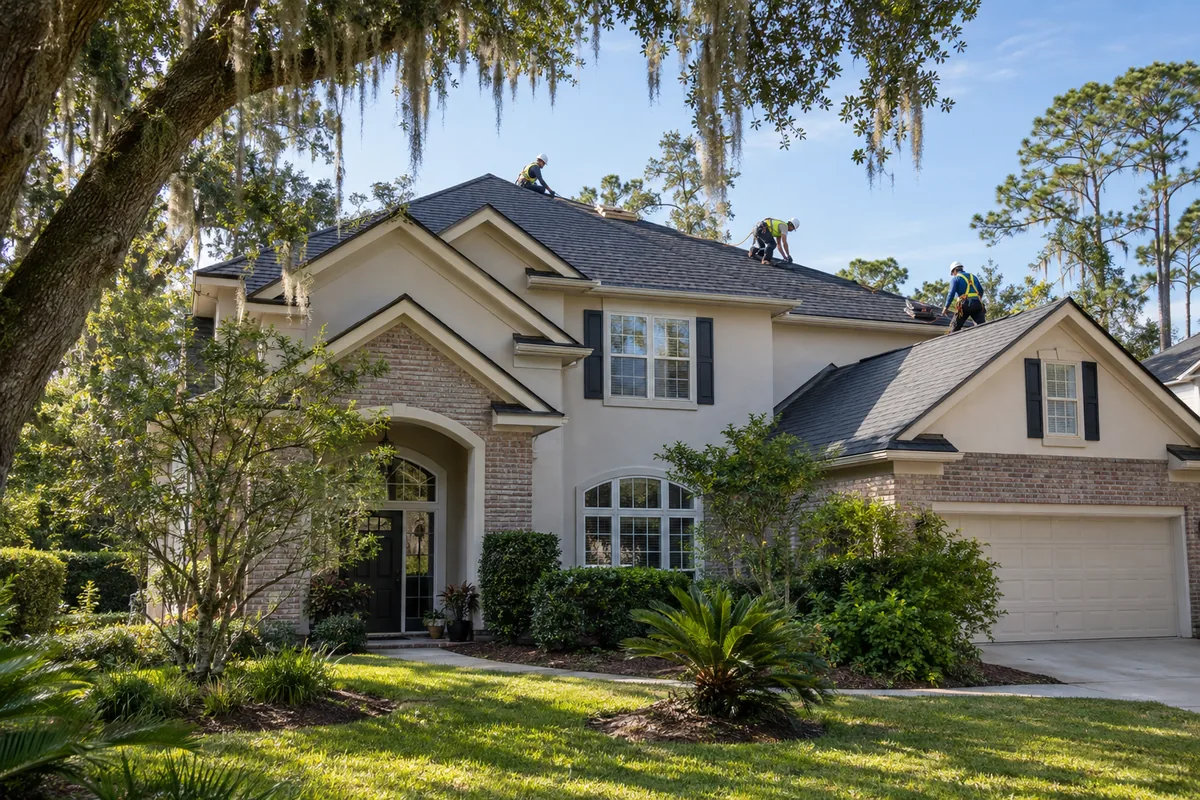 Residential Roofing
 Home roof repair, replacement and maintenance across Duval County: shingles, metal and tile on every era of Jacksonville house.
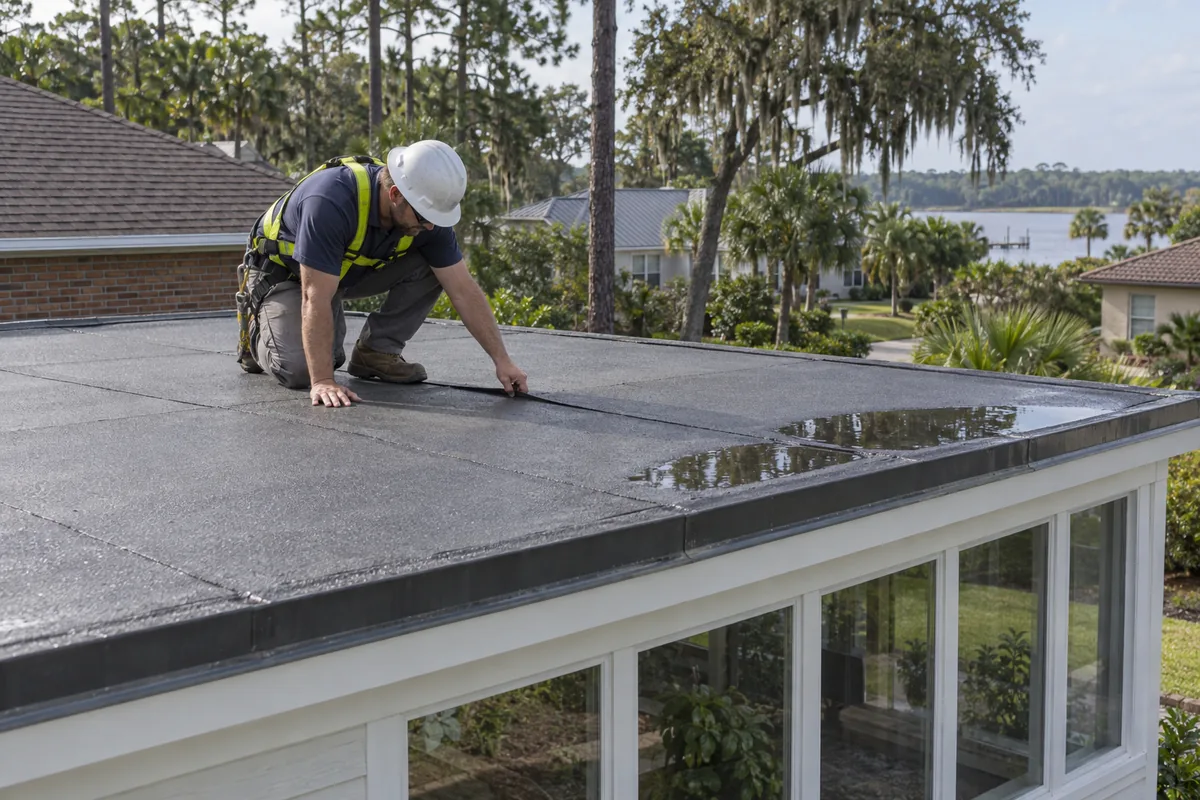 Flat Roof Repair
 Low-slope roofs on homes and businesses: TPO, EPDM, modified bitumen and built-up, with ponding, seams, drains and flashing repaired.
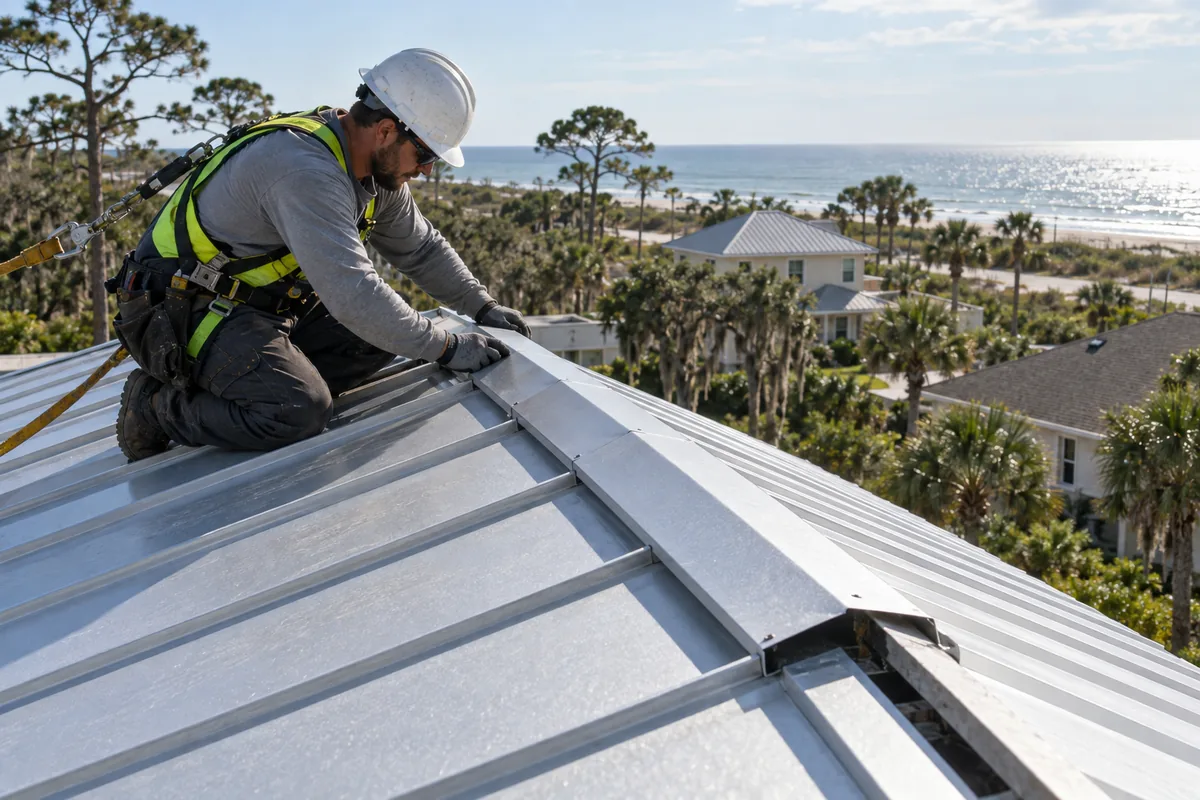 Metal Roofing
 Standing seam and 5V crimp metal roofs at the Beaches and on historic homes: fasteners, corrosion, laps, flashing and new installs.
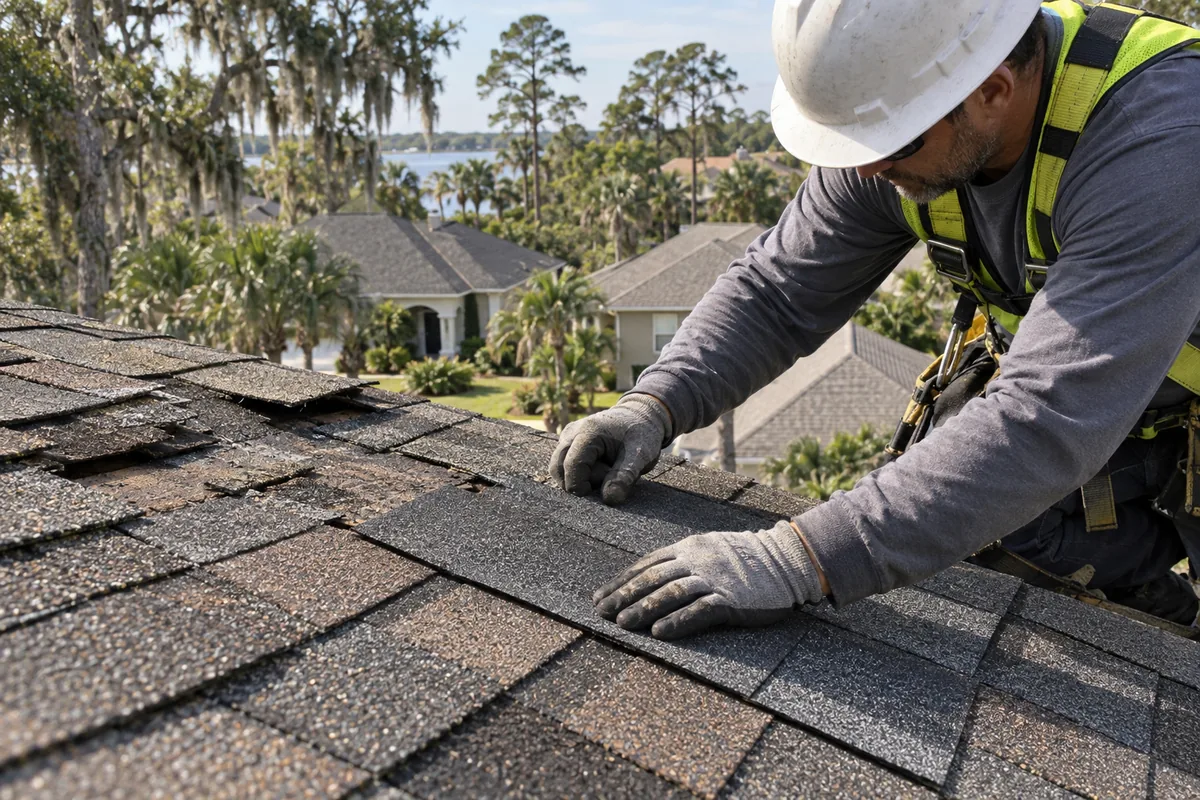 Shingle Roof Repair
 Asphalt shingle repairs across Duval County: lifted tabs, ridge caps, nail pops, cracked pipe boots, valleys and matched replacements.
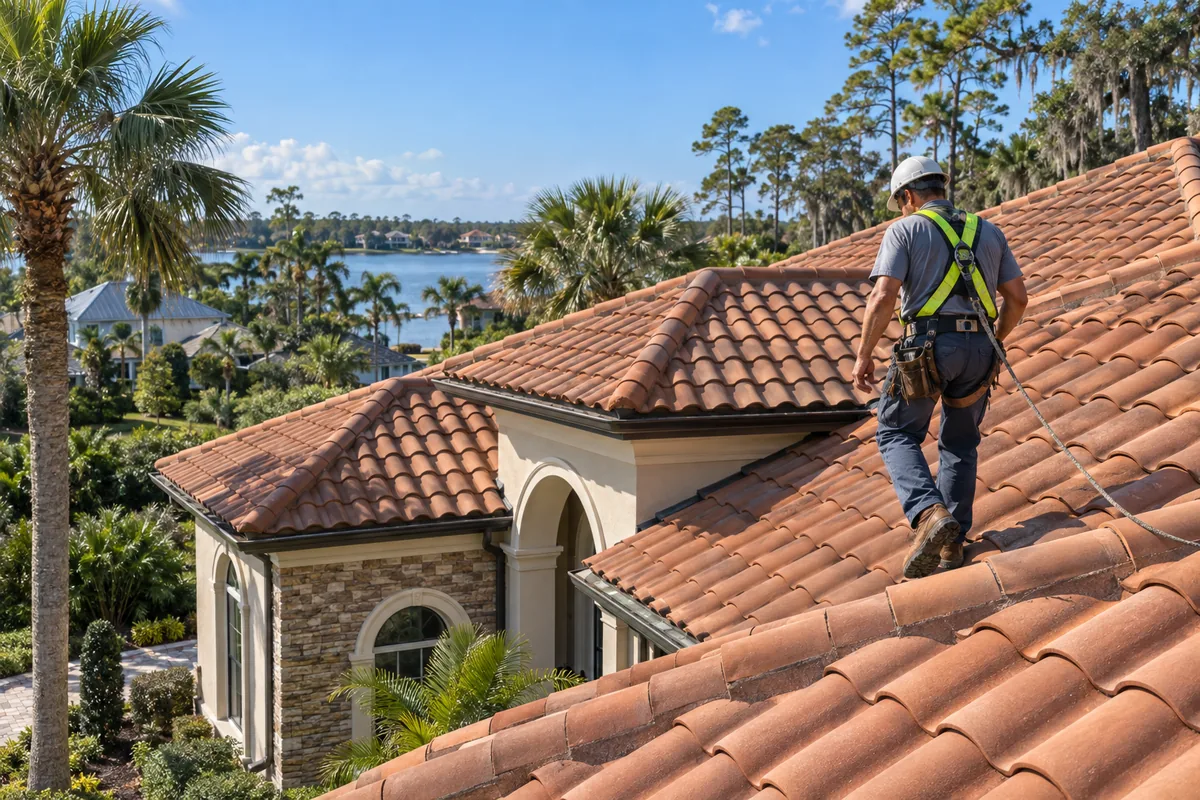 Tile Roof Repair
 Concrete and clay tile roofs in Ponte Vedra, Deerwood and Mandarin: broken tiles, underlayment, ridge mortar, valleys and full re-lays.
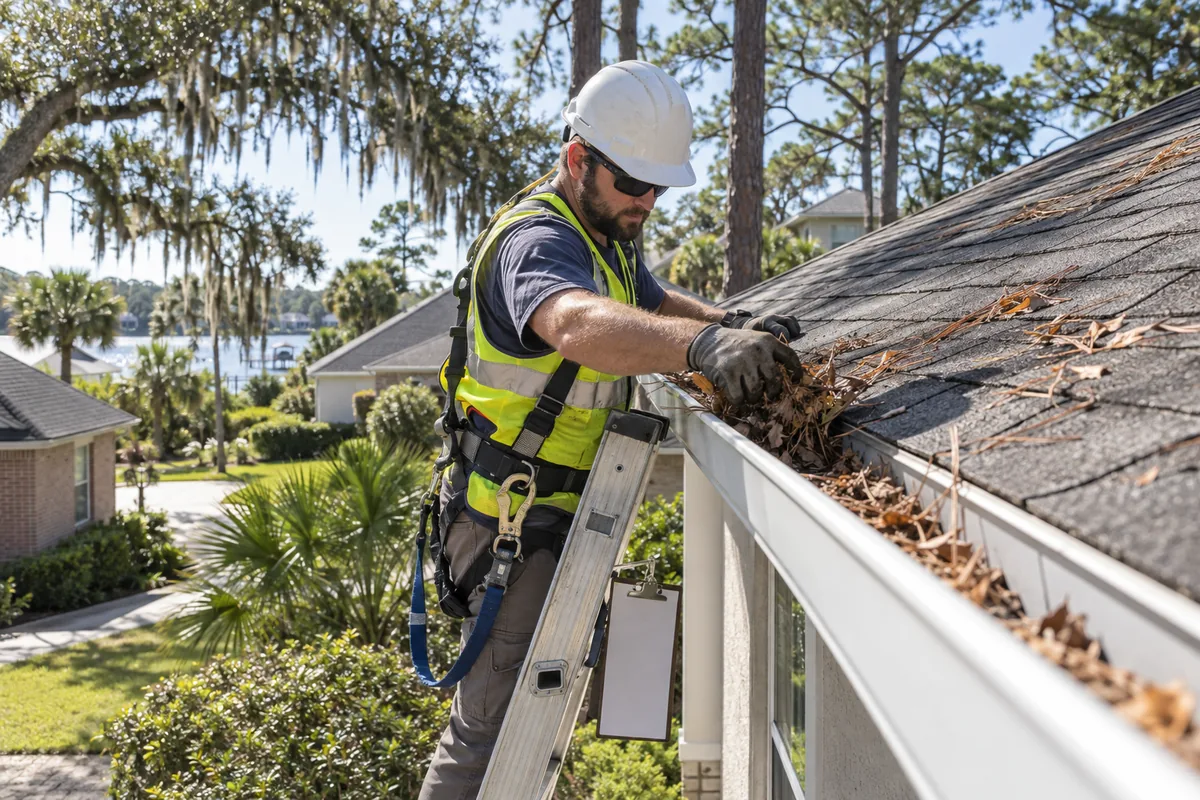 Maintenance & Inspections
 Pre-hurricane and after-storm checks, gutter and valley cleaning, pipe boot and sealant renewal, wind mitigation and 4-point reports.
"Roofing Jacksonville" covers a lot of ground. A roofer in Riverside is on a 1920s hip roof with dormers and a historic district to satisfy. The same roofer in Baymeadows is on a 1990s three-tab roof that has reached the age where insurers start asking questions, and at Jacksonville Beach the problem is salt air eating the flashings and a nor'easter pushing rain under the shingles on the windward slope. Knowing which is which is most of the job.
Whether you need a leak fixed this week or a full replacement planned before hurricane season, the process is the same: tell us the neighborhood and the roof, get an inspection, get an itemized estimate in writing, and have the work done by someone licensed and permitted to do it.
Most of the work is leak repair on asphalt shingle roofs, which cover the majority of homes in Duval County. That means replacing wind-lifted or missing shingles and ridge caps, swapping cracked pipe boot flashings, sealing nail pops, rebuilding valleys worn by pine needle debris, and reflashing chimneys, skylights and roof-to-wall joints. On metal roofs it means replacing rusted or backed-out fasteners, resealing seams and swapping panels corroded by salt air near the Beaches and the St. Johns River. On tile roofs in Ponte Vedra Beach or Deerwood it means resetting slipped tiles and repairing the underlayment beneath them. Flat and low-slope sections on porches, additions and commercial buildings get patched or recoated. Rotted fascia and decking at the eaves, storm tarping and emergency dry-in round out the list. The roof is inspected before any of it is priced.
Usually, yes. Most leaks in Jacksonville come from one failed component, not the whole roof: a split pipe boot, a lifted ridge cap, a worn valley, a rusted piece of flashing, or a few shingles blown off in a storm. Each of those is a repair. Replacement becomes the honest answer when the shingles themselves are at the end of their life, with heavy granule loss, curling and cracking across most slopes, when the decking is rotted in several places, or when leaks keep appearing in new spots every rainy season. Roof age also matters in Florida, because insurers scrutinize older shingle roofs and the 25 percent rule can affect how much of a section may be repaired. The roofer inspects first, tells you which situation you are in, and puts the options in writing before you decide.
When the roofing material itself has reached the end of its life rather than one component failing. On shingle roofs that looks like heavy granule loss across most slopes, curling and cracked tabs, bald spots where the asphalt shows, shingles that crumble when lifted, and leaks appearing in new places every rainy season. Rotted decking in several areas, a 3-tab roof from the 1990s with matching shingles no longer made, or a roof that failed a wind mitigation or 4-point inspection all point the same way. Roof age matters in Florida because many insurers will not renew a shingle roof past about 15 years without an inspection. The roofer inspects the whole roof, tells you plainly which situation you are in, and where both are possible puts a repair option and a replacement option in writing.
Architectural asphalt shingles are the default across Duval County because they are affordable, meet Florida wind codes with six nails per shingle and a sealed deck, and are easy to repair. Choose algae-resistant shingles, because humidity and shade grow the black streaks fast here. Metal, whether standing seam or 5V crimp, is growing quickly at the Beaches and on historic Riverside and Avondale homes: it sheds wind-driven rain, reflects heat and lasts far longer, but needs coastal-grade coatings and fasteners because salt air corrodes cheap metal. Concrete and clay tile, common in Ponte Vedra Beach and Deerwood, handles sun and wind well and lasts decades, but it is heavy, needs an underlayment that eventually wears out beneath it, and cracks when walked on carelessly. The right answer depends on the house, the HOA and how long you plan to stay.
Jacksonville falls under the Florida Building Code, currently the 8th edition, in a high-wind coastal region, though not the High-Velocity Hurricane Zone that applies only in Miami-Dade and Broward. On a re-roof that means a sealed roof deck with an approved secondary water barrier or peel-and-stick underlayment so the house stays dry if shingles blow off, ring-shank nails when decking is replaced or re-nailed, six nails per shingle rather than four, metal drip edge at eaves and rakes, and roofing products carrying a Florida Product Approval or Miami-Dade NOA. Attic ventilation and roof-to-wall connections come into play as well. These items are inspected by the building department and are what a wind mitigation inspector later looks for. A written estimate for a Jacksonville re-roof should name each of them.
Two kinds. The manufacturer's warranty covers the materials, such as shingles, underlayment or metal panels, on the manufacturer's terms, and it usually requires installation by the manufacturer's rules, including proper attic ventilation. The roofer's own workmanship warranty covers how those materials were installed, and it should be stated in writing on the estimate rather than promised on the phone. This site does not publish warranty periods because they vary by job, material and manufacturer, and an invented figure would mislead you. What to insist on in Florida: the workmanship warranty, the products used and the scope of work all written down before you approve the job, and a note of whether the manufacturer's warranty is transferable when you sell. Keep the closed Jacksonville permit with those documents.
No reviews are shown on this site until they are real. What you can judge now is the process: inspection first, everything in writing, nothing started without your approval.
Real customer reviews will be published on the reviews page as they come in.
Tell us the neighborhood, the roof type and what is happening. If water is coming in now, you get an honest arrival window for tarping, not a promise in minutes.
The roof is walked, the attic is checked where there is access, and the cause is found: pipe boots, nail pops, lifted shingles, flashing, valleys, decking. Photos of everything.
You get the cause, the fix and the price in writing before anything starts. Extra work found once the roof is open is priced before it is done, never added later.
The work is done to the estimate and to the Florida Building Code, permitted where required, water-tested where it matters, and the yard is cleaned and swept for nails.
Tell us the neighborhood, the type of roof and what is happening. You are called back to arrange an inspection, and the estimate is written before any work starts.