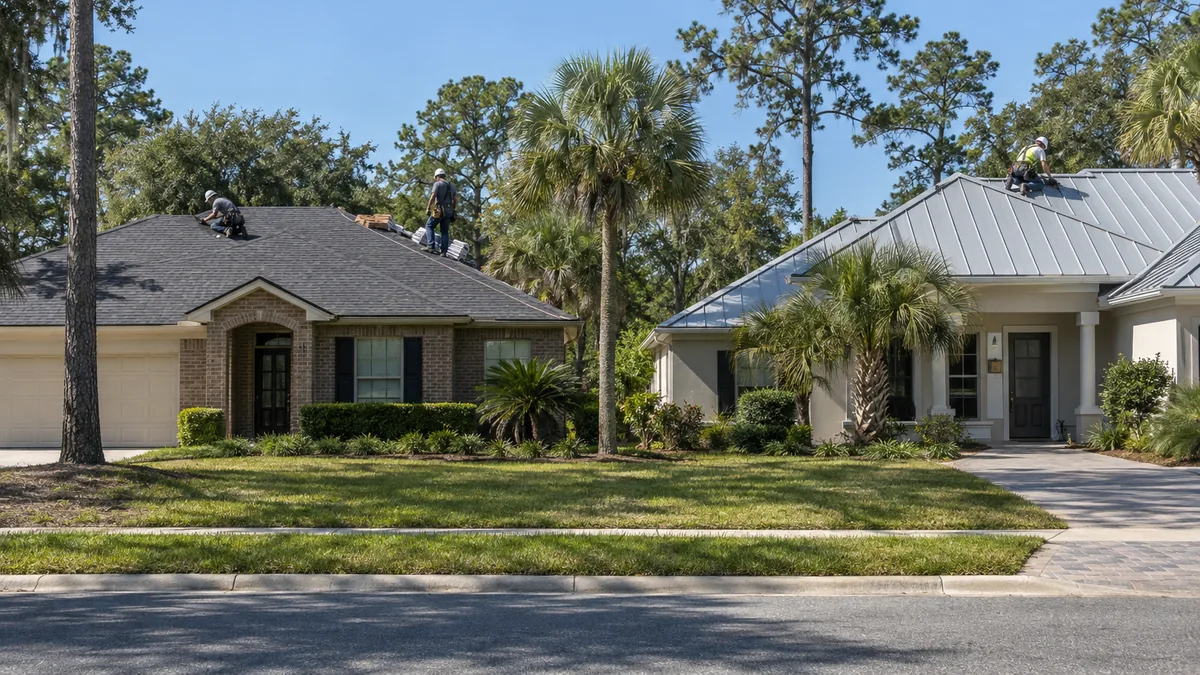
Sooner or later every Jacksonville homeowner with an aging roof hears the pitch for metal. A neighbor in Atlantic Beach put one on after a nor’easter, a relative swears it will last forever, a sales rep says it pays for itself. Meanwhile most of the houses on your street still wear architectural shingles, and they work fine. Both materials have a real place in Duval County. This comparison lays out where each one earns its keep, where it falls short, and what to ask before you sign an estimate for either.
The three options on the table
Architectural asphalt shingles. Also called laminated or dimensional shingles, these are the thicker, layered shingles that replaced flat 3-tab shingles on most new roofs. They dominate Jacksonville, from 1990s homes in Mandarin and Argyle Forest to new construction in Bartram Park and around the St. Johns Town Center.
Standing seam metal. Long vertical panels joined by raised seams, fastened to the deck with concealed clips so no screws go through the face of the panel. It is the premium metal option and is common on new coastal builds at the Beaches and on renovated historic homes in Riverside and Avondale.
Exposed-fastener metal (5V crimp). Panels with five V-shaped ribs, screwed through the face into the deck, with a rubber washer under each screw. It is the traditional Florida metal roof, found on older cottages, farmhouses on the Northside and Westside, and plenty of Old Florida style homes. It usually costs less than standing seam, but every one of those screws is a small maintenance item. The metal roof repair page covers how each type fails and gets fixed.
Up front, metal usually costs more than architectural shingles, and standing seam usually costs more than 5V crimp. Over the full life of the roof, the gap narrows, because a good metal roof can outlast two shingle roofs. Whether that math works for you depends mostly on how long you plan to own the house.
Wind ratings and Florida product approvals
Jacksonville is not in the High-Velocity Hurricane Zone that governs Miami-Dade and Broward, but much of the city, especially near the coast, falls in a high design wind region under the Florida Building Code. Every roofing product installed here needs a Florida Product Approval (or an equivalent approval) for the wind speed of your location, and the installation has to follow that approval.
Architectural shingles carry wind ratings from standardized lab tests, and the higher-rated products are designed for well above hurricane-force gusts when they are installed with the required number of nails, sealed starter strips at the eaves and rakes, and the correct underlayment. In practice, shingle failures in storms are usually at the edges: ridge caps, rakes and the first courses at the eave, where uplift is greatest and where installation shortcuts show up first.
Standing seam and 5V panels also carry product approvals that specify clip or screw spacing, and that spacing tightens at corners and edges. A properly fastened metal roof resists wind very well. A poorly fastened one peels from the edge like any other roof. For both materials, the product matters less than whether the crew followed the approval. Ask the roofer which approval number they will submit with the permit.
Heat, cool roofs and attic temperature
A Jacksonville attic in August can run well over the outside temperature, and that heat works its way into the ceiling, the ducts and the air handler. Roof color and material change how much of the sun’s energy is absorbed.
Metal with a light, reflective factory finish reflects a large share of solar heat and sheds it quickly after sunset. Many painted panels are rated as cool roof products. Dark shingles absorb much more heat, although lighter colored and reflective shingles exist and help. Whichever you choose, attic ventilation matters as much as the roof surface. Soffit intake and ridge exhaust keep heat and humidity from building up under the deck, which extends the life of shingles in particular. Poor ventilation is one of the fastest ways to shorten a shingle roof’s life in North Florida, and some manufacturers will not honor a warranty on an under-vented attic.
Salt air: the Beaches and the Intracoastal
This is where the choice gets specific to your address. Within a few miles of the ocean in Jacksonville Beach, Neptune Beach, Atlantic Beach and Mayport, and along the Intracoastal Waterway and the St. Johns River, salt spray settles on everything.
- Asphalt shingles do not rust, which is an advantage near the ocean. The weak points are the metal parts of the system: drip edge, flashings, vents and nails. Those should be aluminum, stainless or heavily coated when installed near the coast.
- Unpainted Galvalume (steel coated with an aluminum-zinc alloy) performs well inland but is the least suited to direct ocean exposure.
- Painted Galvalume steel is the common choice a little back from the water. Many manufacturers limit or exclude finish warranties within a stated distance of salt water, so read the warranty before you buy.
- Aluminum panels do not red rust and are the usual recommendation for oceanfront and near-ocean homes. They cost more and dent more easily than steel.
On any metal roof near the coast, the fasteners, closures and trim have to match the panel’s corrosion resistance. Mixing metals, such as steel screws in aluminum panels, causes galvanic corrosion. The Beaches region page covers what salt air does to every roof type over time.
Noise, hail and algae
Noise. Metal over solid decking with underlayment and an insulated attic is only slightly louder than shingles in a downpour. The drum-like noise people associate with metal comes from panels on open framing, like a carport.
Hail. Jacksonville sees occasional spring hail. Impact-rated shingles resist it reasonably well, and standard shingles can bruise and lose granules. Metal rarely leaks from hail, but it can dent, and dents on a visible slope are a cosmetic issue that some insurance policies exclude. Ask your agent whether your policy has a cosmetic damage exclusion for metal.
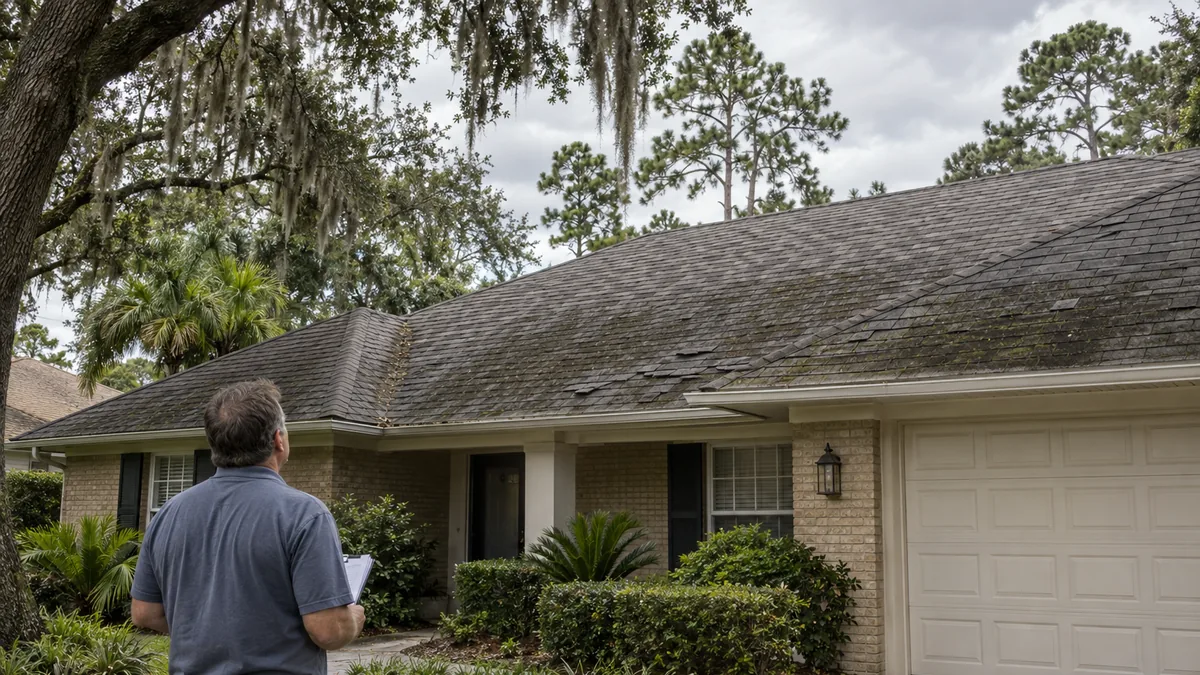
Algae. The black streaks on Jacksonville shingles come from algae that thrives in humidity and shade. Algae-resistant shingles slow it down, and most architectural lines now include that feature. Metal does not feed algae the same way, though it can collect mildew and pollen under heavy tree cover. Under the live oaks in San Marco, Ortega and Fort Caroline, both materials benefit from keeping limbs trimmed back and valleys clear of pine needles.
Lifespan, repairability and maintenance
Typical ranges for Jacksonville, assuming a proper installation and a ventilated attic:
| Material | Common lifespan here | Repair and maintenance |
|---|---|---|
| Architectural shingles | about 18 to 25 years | Easy to repair; matching gets harder as shingles fade or products are discontinued |
| 5V crimp metal | about 25 to 40 years | Screws and washers need periodic replacement; panels are simple to swap |
| Standing seam metal | 40 years or more | Few maintenance items; repairs need a crew familiar with the specific panel system |
Shingles are the most forgiving material to repair. Almost any licensed roofer can replace a pipe boot, a few wind-damaged shingles or a run of ridge caps in a morning, and the shingle roof repair page explains how. Metal repairs are less frequent, but when they are needed, the panel profile, gauge and color must match, and standing seam in particular is not something to hand to a crew that has never worked on it.
Maintenance looks different too. A shingle roof in Jacksonville needs its valleys and gutters cleared of pine needles, its pipe boots checked as they age in the sun, and a look after every named storm. A 5V roof needs the same storm checks plus a periodic walk to find backed-out screws and cracked washers. A standing seam roof mostly needs its closures, flashings and sealant joints inspected. In every case, a yearly look through the maintenance and inspection service catches small problems while they are still small.
Insurance, roof age and wind mitigation
In Florida, the roof covering is one of the biggest factors in homeowner insurance. Insurers often become reluctant to write or renew coverage on shingle roofs somewhere around 15 years old, while metal roofs are commonly accepted for longer. State law now limits how insurers can treat roofs under 15 years old and gives owners of older roofs the option of an inspection showing remaining life. The post on roof age and home insurance in Florida covers those rules in detail.
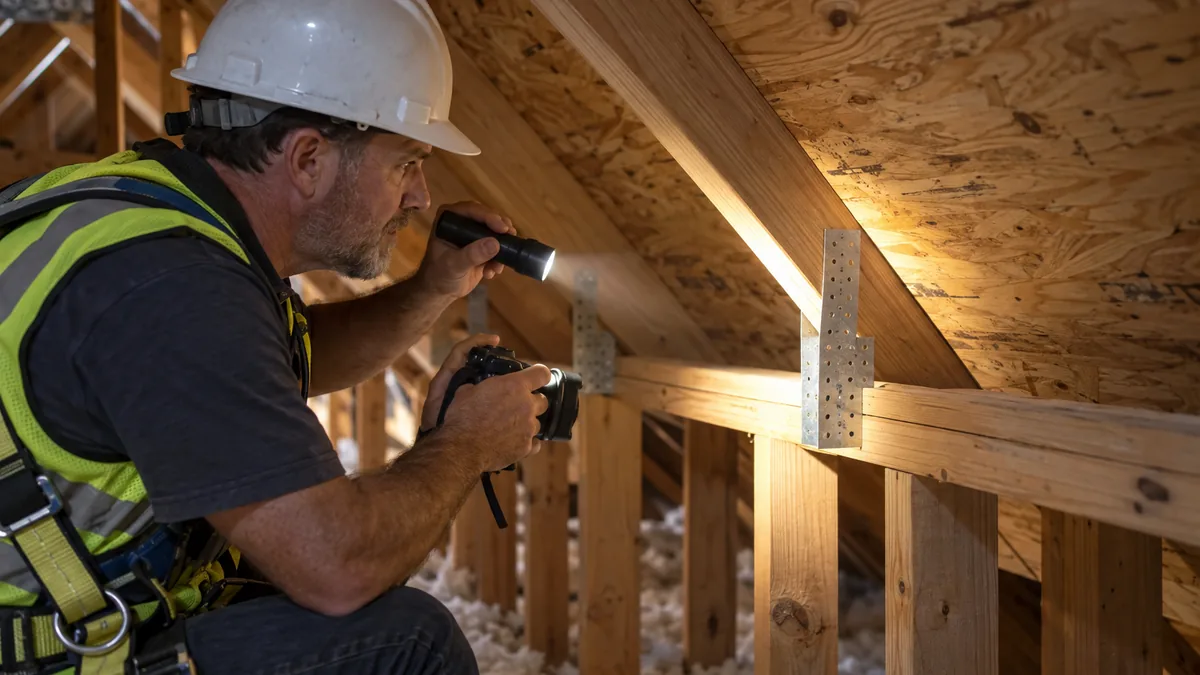
A wind mitigation inspection records the roof covering and permit date, the roof deck attachment, the roof-to-wall connection and whether a secondary water barrier is present. A new roof of either material, permitted and installed to the current code, can improve that report. The wind mitigation inspection guide explains what the inspector looks for. No roofer can promise what your carrier will do, so ask your agent how each material is treated before you decide.
HOA and historic district rules
Before choosing a material, find out who else gets a vote. Many newer subdivisions in Duval County, including Bartram Park and several communities in Oceanway, have HOA architectural guidelines that specify approved roof materials, profiles and colors. Some do not permit metal at all, and others allow it only in certain colors. The approval process can take weeks, so start it before you sign a contract.
In the Riverside, Avondale and Springfield historic districts, visible roof changes on contributing homes generally require historic preservation review through the City of Jacksonville before a permit is issued. Metal is historically appropriate on some older homes and not on others, depending on the original roof. A roofer who works in these neighborhoods will know to ask about this at the first visit.
What to ask for in an estimate
Whether you choose shingles or metal, a written estimate from a Florida-licensed roofer should spell out:
- The exact product, including manufacturer line, panel profile or shingle series, gauge or weight, color, and the Florida Product Approval number.
- Underlayment and secondary water barrier, by type, and whether the deck will be sealed.
- Deck work, including renailing to current code and a per-sheet rate for any rotted decking found.
- Flashings, drip edge and fasteners, including the metal they are made of, which matters near the coast.
- Ventilation, including soffit and ridge venting, and whether the attic meets the manufacturer’s requirements.
- The permit, pulled with the City of Jacksonville or the Beaches city building department.
- Warranties, both the manufacturer’s and the roofer’s workmanship warranty, in writing, including any salt-air limits.
- HOA or historic approval, if required, and who is responsible for obtaining it.
If you are weighing a full replacement, the roof replacement page walks through what the job involves from tear-off to final inspection. The honest answer for most Jacksonville, Florida homes is that both materials work when installed correctly. The better choice is the one that fits your location, your budget, your plans for the house and the rules of your neighborhood.
Questions on this topic
Is a metal roof better than shingles in Jacksonville?
Not automatically. Metal usually lasts longer, reflects more heat and handles wind well when it is installed to its Florida Product Approval. Architectural shingles cost less up front, are easy to repair and match, and are accepted by nearly every HOA. The right answer depends on how long you plan to stay in the house, how close you are to salt water, what your HOA or historic district allows, and what your insurer rewards. A good roofer lays out both options for your specific roof in a written estimate rather than pushing one product for every home.
Which metal is best for a house near the ocean in Jacksonville Beach or Atlantic Beach?
Near direct salt spray, aluminum panels are generally the safest choice because aluminum does not rust the way steel does. Painted Galvalume steel is widely used a little further inland and along the Intracoastal Waterway, but many manufacturers limit or exclude their finish warranties within a set distance of salt water, so ask to see the warranty terms in writing. Unpainted Galvalume is the least suited to oceanfront exposure. Whatever the panel, the fasteners, flashings and trim near the coast should be stainless or coated to match, or they will corrode first.
Is a metal roof louder in the rain than a shingle roof?
On most Jacksonville homes, not by much. Metal installed over solid roof decking with underlayment and an insulated attic below sounds very similar to shingles during an afternoon thunderstorm. The loud metal roofs people remember are usually on barns, carports or porches where the panels sit on open purlins with nothing underneath. You may hear heavy rain a little more on a metal porch roof or a room with a vaulted ceiling, where there is less attic space and insulation between the roof and the room.
How long does a shingle roof last in Jacksonville compared with metal?
Florida sun and humidity are hard on asphalt. Architectural shingles in Jacksonville commonly last around 20 to 25 years with good attic ventilation, less on a hot, poorly vented roof. Exposed-fastener 5V crimp metal often reaches 25 to 40 years if the fasteners are maintained. Standing seam metal commonly lasts 40 years or more. These are ranges, not promises: installation quality, ventilation, tree cover and distance from salt water all move the number, and insurers may still ask for an inspection on an older roof.
Does a metal roof lower homeowners insurance in Florida?
It can help, but no one can promise a specific result. A wind mitigation inspection records the roof covering, its permit date, the roof deck attachment, the roof-to-wall connection and the secondary water barrier, and insurers apply credits for features that meet their criteria. A new, permitted roof of either material, installed to the current Florida Building Code, can improve that report. Insurers also tend to accept older metal roofs longer than older shingle roofs. Ask your agent how your carrier treats each material before you decide.
Can my HOA or historic district stop me from installing a metal roof?
Yes. Many newer subdivisions in Duval County, such as Bartram Park and parts of Oceanway, have HOA architectural rules that specify roof materials and colors, and some do not allow metal at all or only allow certain profiles. In the Riverside, Avondale and Springfield historic districts, visible roof changes generally go through the City of Jacksonville historic preservation review before a permit is issued. Get the approval in writing before signing a roofing contract, and make sure the roofer's estimate names the exact product and color that was approved.
- metal roof
- architectural shingles
- standing seam
- 5V crimp
- salt air
- wind mitigation
- Jacksonville