
A roof is one of the few home repairs that cannot wait for a convenient month. When a nor’easter puts water through a ceiling in Neptune Beach, or an insurer sends a non-renewal letter to a house in Mandarin because the shingles have reached fifteen years, the question is not whether the work needs doing but how to pay for it. This article lays out the general landscape for homeowners in Jacksonville and Duval County: what contractor financing is, how home equity and personal loans compare, how PACE assessments work in Florida, what FHA Title I covers, where insurance proceeds and deductibles fit, and why “affordable” should mean a fair itemized estimate rather than the lowest bid.
Two things first. Nothing here is financial advice, and no program, lender, rate or approval is being promised. The roofer behind this site will list its actual financing arrangements on the pricing page once they are confirmed, and until then this is background reading so that you understand the terms when you see them.
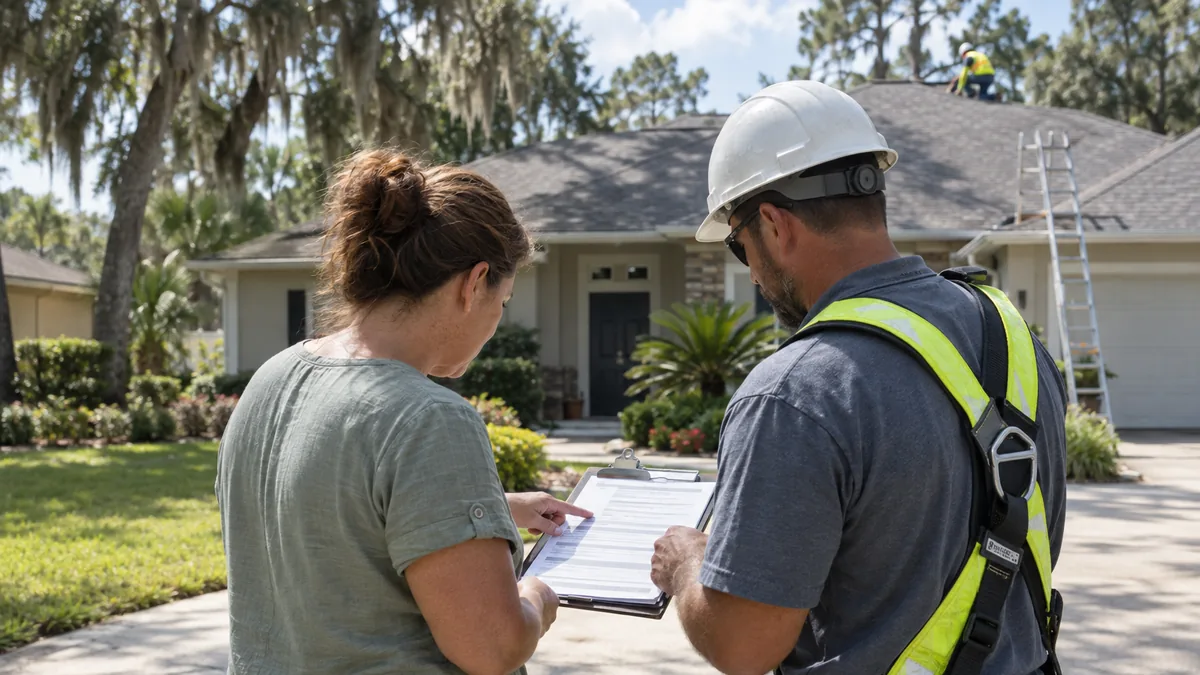
Start with the estimate, not the loan
Financing a bad estimate is still a bad estimate, with interest. Before comparing lenders, get the roof inspected and the work priced in writing, itemized by scope, materials, labor, decking allowance, permit, disposal and warranty. The cost article explains what each line means and why three roofers come back with three numbers.
Searches for affordable roofing contractors in Jacksonville are usually looking for the cheapest bid. The cheapest bid is often the one that left out the permit, the underlayment upgrade the Florida Building Code requires, workers’ compensation coverage, or the decking that will be found rotten once the shingles come off. That job gets more expensive after it starts, when you have no leverage. An affordable roof is one where the price matches a complete, honest scope, from a licensed contractor who will still be in Duval County when the warranty is needed. Financing is a tool for paying that price over time. It does not make an incomplete job complete.
Contractor-arranged financing through third-party lenders
Many roofing companies in Jacksonville advertise financing. In almost every case the money comes from a third-party lender that specializes in home improvement, not from the roofer. The roofer submits your application, usually from a tablet during the estimate, the lender runs credit and approves or declines within minutes, and once the job is done the lender pays the roofer and you repay the lender. The convenience is real. So are the details.
What to read in the terms. The interest rate, whether it is fixed, the length of the term, the monthly payment, any origination or dealer fee, and whether there is a penalty for paying early. A dealer fee is a percentage the lender charges the roofer for the promotional offer, and roofers sometimes build it into the estimate, which means the financed price and the cash price may differ. Ask.
Promotional periods. Offers such as no interest for a set number of months, or no payments for a set period, are common. Two very different products hide behind similar wording. A true zero-interest period charges nothing during the promotion and then starts charging interest on whatever balance remains. A deferred interest period charges nothing if the entire balance is paid before the deadline, but if any amount remains, interest is applied retroactively to the full original balance from the day of purchase. The agreement will say which one it is, usually in the disclosures rather than the headline. If you take a deferred interest offer, calculate the monthly payment that clears the balance with a month to spare and set it up automatically.
Same-as-cash confusion. “Same as cash” typically means deferred interest. It is not the same as cash if a balance remains.
Payment-only pitches. A salesperson who talks only in monthly payments and never states the total financed amount and rate is steering you away from the number that matters. Ask for the total cost of credit over the term.
None of this makes contractor financing a bad choice. For a repair after a storm, when the insurer has not paid yet and the house cannot wait, it is often the fastest path. It simply needs to be read.
Home equity loans and HELOCs
For a homeowner with equity, borrowing against the house is often one of the lower-cost ways to pay for a roof, because the loan is secured. A home equity loan pays out a fixed amount at a fixed rate with a set monthly payment, which suits a replacement with a known price. A home equity line of credit, or HELOC, is a revolving line you draw on as needed, usually at a variable rate, which suits a project done in stages or a repair whose final cost depends on what is found under the shingles.
Both take longer to set up than contractor financing, often weeks, and involve an application, closing costs, and sometimes an appraisal. Both put the house on the line if the payments are not made. Interest on home equity borrowing used for home improvement may be deductible in some circumstances; that is a question for a tax professional, not a roofing site. Talk to your own bank or credit union, and shop more than one.
Personal loans and credit cards
An unsecured personal loan from a bank, credit union or online lender does not put the house at risk and funds quickly, usually within days. The trade-off is a higher rate than secured borrowing, with the rate depending heavily on credit score. For a mid-sized repair, it can be a reasonable middle ground.
Credit cards are the most expensive option in most cases and the easiest to fall into after an emergency. A card with an introductory zero-interest period can work for a small repair that will be paid off before the period ends, but the ordinary purchase rate on a card is rarely the right way to carry a roof for years. If you use a card for the tarping invoice on a Saturday night, that is sensible; using one for a replacement in Bartram Park without a plan to pay it off is not.
Insurance proceeds and your deductible
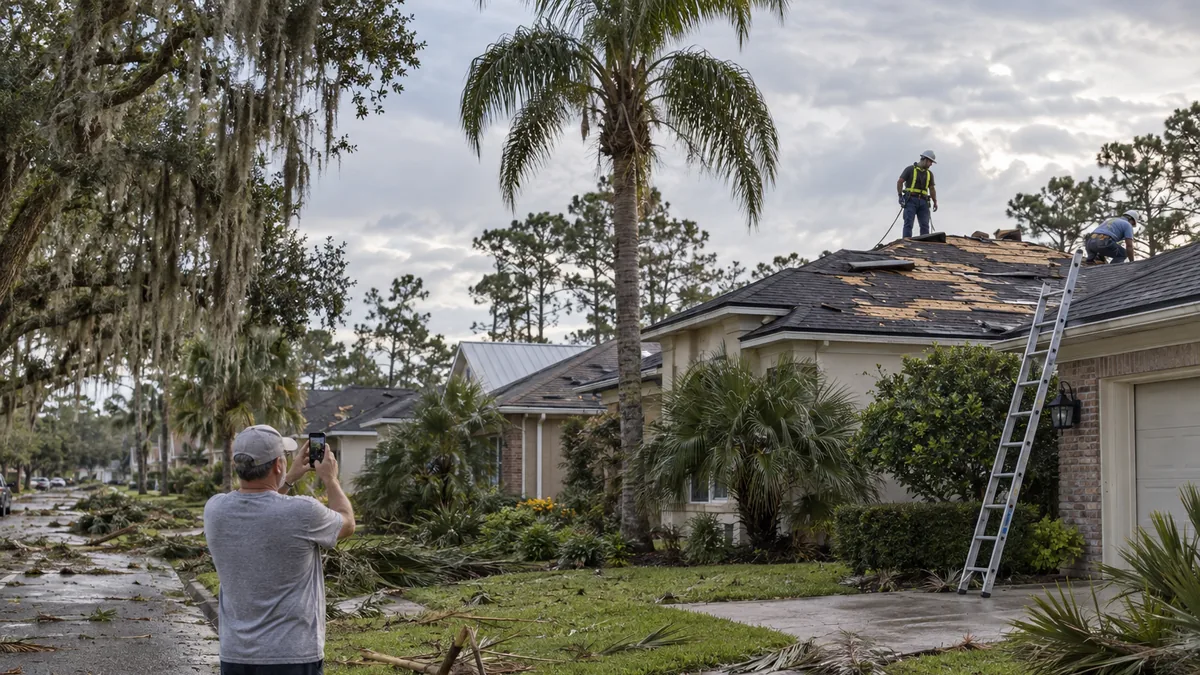
If the damage was caused by wind, hail or a fallen tree, your homeowner policy may cover the repair, and that changes the financing question entirely. The storm damage and insurance claim guide walks through the process. For financing purposes, three points matter.
First, the insurer pays the covered amount minus your deductible, and the deductible is yours to pay. Florida statute 489.147 makes it illegal for a contractor to pay, waive, rebate or absorb it. A roofer who offers a “free roof” through insurance is offering to commit fraud with your name on the claim. Walk away.
Second, hurricane deductibles are usually a percentage of dwelling coverage rather than a flat amount, so after a named storm the out-of-pocket share can be larger than expected. Your declarations page shows the figure. It is worth knowing before the season starts rather than after.
Third, timing. Insurers often pay in stages, with part of the settlement held back until the work is complete, and if there is a mortgage the check may be made out to you and the lender together. Contractor financing or a line of credit sometimes bridges the gap between the tarp and the settlement. Keep every invoice, because reasonable emergency mitigation is generally part of the claim.
PACE programs in Florida
Property Assessed Clean Energy, or PACE, is a financing structure created by Florida statute that funds energy and wind-hardening improvements, including roofs, through a non-ad valorem assessment added to the property tax bill. It is administered by entities such as the Florida PACE Funding Agency and by local programs authorized by counties and cities. Contractors registered with a program can offer it during the estimate.
How it differs from a loan: approval is based mainly on home equity and property tax payment history rather than credit score, which makes it available to some homeowners who would not qualify elsewhere. Repayment runs over a long term through the tax bill, so it feels like a higher tax rather than a monthly loan payment. The assessment is attached to the property, not the person, and in principle passes to the next owner.
The cautions are real. The assessment takes priority over the mortgage, which many mortgage lenders and the federal housing agencies object to, so a PACE assessment can complicate a refinance or a sale, and a buyer’s lender may require it to be paid off at closing. Rates and fees have been criticized as high relative to secured borrowing. And because approval does not consider income in the way a loan does, some homeowners have taken on assessments they struggle to pay through escrow. Availability in Duval County depends on whether the City of Jacksonville has authorized a program at the time, and that status has changed more than once, so check the current position with the city and read the financing agreement in full. PACE is not being recommended or discouraged here; it is described so you recognize it when a contractor mentions it.
FHA Title I and other government-backed options
The FHA Title I Property Improvement Loan program insures loans made by approved private lenders for improvements that make a home more livable or useful, which includes a roof. The loan is unsecured below a threshold amount and secured by the property above it, and the lender, not the government, sets the rate and decides the application. Not every bank offers Title I loans, and the program has limits on amount and term that change, so this is general information rather than a description of what is available today.
Other programs exist for specific situations: rehabilitation loans bundled into a purchase or refinance, assistance for veterans through VA-backed products, and occasional local or state hardening grants that appear after major storms and close when funding runs out. These come and go. If one is mentioned to you, verify it with the agency directly rather than through a contractor.
Condo and HOA roofs: reserves and assessments
In the condo buildings along the Beaches and the townhome communities near the St. Johns Town Center and in Deerwood, the roof usually belongs to the association rather than the unit owner. The association pays for it from reserves built up through monthly dues, or, when reserves fall short, through a special assessment split among the owners. Florida law tightened reserve requirements for condo associations after 2022, which is one reason dues have risen across the state.
If you are a unit owner, your financing question is how to pay a special assessment, and the options above apply. If you are on the board, the commercial roofing page describes how larger low-slope and multi-building roofs are inspected and priced, and the same rule holds: an itemized estimate from a licensed contractor, compared against two others, before any vote.
Phased repairs, replacement and what a new roof does to your premium
Not every roof needs replacing this year, and an honest roofer will say so. Repairs that stop active leaks, such as pipe boots, step flashing, a valley, and a section of wind-lifted shingles, can be done now, with replacement planned for a year when the money is easier. What does not work is a replacement done in pieces over several years: mismatched shingles, repeated setup costs, and for roofs built before the 2007 Florida Building Code, the 25% rule may force a full section anyway. Ask which rule applies to your roof and get the sequence in writing. The roof replacement page explains what a full replacement involves.
A new roof also changes the insurance conversation. Florida insurers frequently refuse to write or renew policies on shingle roofs past about fifteen years, and a replacement done under a permit resets that clock. A wind mitigation inspection on form OIR-B1-1802 afterwards documents the sealed deck, secondary water barrier and roof-to-wall connections that insurers are required to discount. No figure is promised here, because premiums vary by insurer, house and neighborhood. But for a homeowner in Arlington or Cedar Hills facing non-renewal, the premium change and the ability to keep coverage at all are part of the real cost of the roof, and they belong in the same calculation as the loan.
The process on this site does not change with the payment method. The roof is inspected, the estimate is written and itemized, extra work found once the roof is open is priced before it is done, and nothing starts in Jacksonville, Florida until you have approved both the work and the way you are paying for it.
Questions on this topic
Do roofing companies in Jacksonville offer financing?
Many do, almost always through a third-party lender rather than the roofer itself. The roofer submits your application, the lender approves it and pays the roofer, and you repay the lender. The terms are the lender's, not the roofer's, so read the agreement for the rate, the term, any promotional period, whether interest is deferred or waived during that period, and what happens if a balance remains when it ends. The roofer behind this site will list its actual financing arrangements on the pricing page once they are confirmed. Nothing in this article is a promise of any program.
What is PACE financing and is it available in Duval County?
PACE stands for Property Assessed Clean Energy. In Florida it funds wind-hardening improvements, including roofs, through a special assessment added to your property tax bill rather than a conventional loan. Approval is based mainly on home equity and tax payment history rather than credit score. The assessment stays with the property, takes priority over the mortgage, and can complicate a sale or refinance. Availability depends on whether the local government has authorized a PACE program, so check the current status with the City of Jacksonville and read the financing agreement closely before signing.
Is a home equity loan or HELOC a good way to pay for a roof?
For a homeowner with equity, it is often one of the lower-cost options because the loan is secured by the house. A home equity loan gives a fixed amount at a fixed rate with a set payment. A HELOC is a revolving line you draw on as needed, usually at a variable rate. Both take longer to set up than contractor financing and involve closing costs and, in some cases, an appraisal. Both also put the house at risk if you cannot pay. Talk to your own lender, and treat this as general information rather than advice.
What is a deferred interest promotion and why be careful?
Some contractor-arranged financing offers a promotional period with no interest if the balance is paid in full before the period ends. With deferred interest, if any balance remains at the end, interest is charged retroactively on the entire original amount from day one. That is different from a true zero-percent period where interest simply starts on the remaining balance afterwards. The agreement will say which it is. If you take a deferred interest offer, set up payments that clear the balance before the deadline, and keep a record.
Can I split a roof job into phases to spread the cost?
Sometimes. Repairs that stop active leaks, such as pipe boots, flashing and a section of wind-lifted shingles, can be done now, with a full replacement planned for a later year. What does not work is doing a replacement in pieces over time, because it creates mismatched material, repeated setup costs, and the Florida 25% rule may apply to roofs built before the 2007 code. Ask the roofer for an honest sequence: what has to happen now to keep water out, and what can wait. The itemized estimate should show both.
Will a new roof lower my homeowner insurance premium in Florida?
It often changes it, though no figure can be promised because every insurer prices differently. A roof replaced under a permit to the current Florida Building Code resets the roof age that insurers use, and a wind mitigation inspection on form OIR-B1-1802 documents features such as a sealed roof deck, secondary water barrier and roof-to-wall connections that insurers are required to discount. For a home whose policy was up for non-renewal because of roof age, a new roof can be the difference between coverage and none. Ask your agent before you commit.
- roof financing
- affordable roofing
- PACE Florida
- HELOC
- FHA Title I
- insurance deductible
- Jacksonville