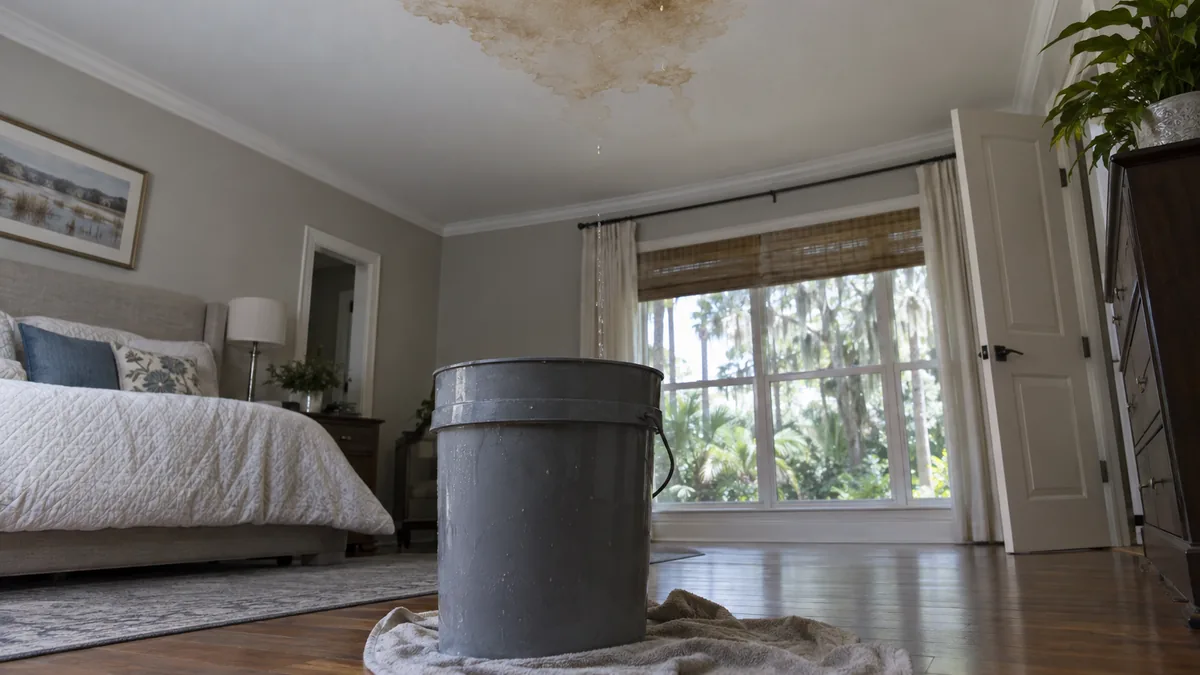
A brown ring on the ceiling in July is one of the most common reasons a Jacksonville homeowner picks up the phone to call a roofer. Sometimes it is the roof. Just as often, in a house where the air conditioner runs twelve hours a day and the outdoor humidity rarely drops below uncomfortable, it is something else: an air handler in the attic with a clogged drain, a supply duct sweating through its insulation, a window that lets water behind the stucco, or a slow plumbing drip. This post walks through the early signs of a real roof leak in a humid North Florida house, and how to rule out the look-alikes before anyone climbs a ladder.
Why humidity makes roof leaks harder to read
In drier parts of the country, a wet spot on the ceiling almost always means water came in from outside. In Jacksonville, Florida, the air itself carries enough moisture to make water appear where no rain ever reached. Summer dew points sit in the 70s for weeks, and every cold surface inside the house becomes a place for that moisture to condense. Ducts, air handler cabinets, supply registers and the back side of drywall near a vent can all drip.
At the same time, a real roof leak in Duval County does damage faster than it would up north. Wet insulation does not dry out on its own in a sealed, hot attic. Drywall that stays damp for a few days grows mold. So the cost of guessing wrong runs both ways: calling a roofer for an AC problem wastes a visit, and assuming a roof leak is just condensation lets it run through a whole rainy season.
The good news is that each source leaves a pattern. Learning to read those patterns is most of the job.
The early signs of a real roof leak
A roof leak rarely announces itself with a drip on day one. The earlier signs are quieter:
- A faint ring or yellowed patch on the ceiling that appears or darkens within a day or two of rain.
- Paint bubbling or peeling at the top of an exterior wall, often under a roof-to-wall joint or near a chimney.
- A damp smell in one room that gets stronger after storms.
- Granules in the gutter or at the bottom of a downspout, a sign shingles are wearing and less able to shed water.
- Daylight through the roof decking when you look up from the attic with the lights off.
- Rusty nail tips or dark streaks on the underside of the decking, visible from the attic, which show water has been reaching that spot.
- Stains on the soffit or rotted fascia boards at the eaves, often from gutters overflowing back under the drip edge.
The single most useful test is timing. A roof leak follows the weather. It shows up or grows after rain, and it holds steady or dries during a dry week. Keep a simple note on your phone of when the stain changed and what the weather was doing, and you will have more diagnostic information than most homeowners bring to a roofer.
The look-alikes: AC, plumbing, windows and attic moisture
AC condensation. Many Jacksonville homes, especially the 1980s and 1990s houses in Mandarin, Baymeadows and Argyle Forest, have the air handler in the attic. It produces gallons of water a day in summer, which drains through a condensate line. When algae clogs that line, the secondary pan fills and overflows, or the float switch shuts the system down. A stain directly below the air handler, or one that appears on a hot, cloudless afternoon, is a strong hint. Sweating ducts do the same thing on a smaller scale: a torn or thin duct jacket lets humid attic air touch cold metal, and water drips onto the ceiling along the duct run. Supply registers in the ceiling can also sweat and leave a ring right around the vent.
Plumbing. Bathroom and kitchen stains are tricky, because the roof above them has a plumbing vent with a rubber boot, and the boot is the most common roof leak source in the area. The difference is again timing. A shower pan, a toilet wax ring or a supply line drip does not care whether it rained. A second-floor bathroom stain that shows up on sunny days is almost certainly plumbing.
Windows and stucco. On the stucco-sided homes common in Bartram Park, Oceanway and newer subdivisions off I-295, wind-driven rain often gets in around window frames or through cracks in the stucco and runs down inside the wall. That water shows up at the window header, on the sill, or at the baseboard below, rather than on the ceiling. Sometimes it appears on the ceiling of a lower floor, which is why it gets blamed on the roof.
Attic condensation from poor ventilation. An attic with blocked soffit vents, missing ridge venting or bathroom fans that dump moist air into the attic instead of outside will collect moisture under the decking. On the cool mornings Jacksonville gets in January and February, that moisture condenses on the cold decking and drips. The pattern is wide and scattered, with dampness across the underside of the roof rather than one clean trail.
The roof leak repair page explains how a roofer traces a confirmed leak to its entry point. The goal here is earlier: deciding whether the roof is the right suspect at all.
Room by room: where to look
Bedrooms and living areas under a simple roof slope. Stains here are the most likely to be roof-related, especially near outside walls on the northeast side of the house. Check for a nearby valley, a lower roof meeting a wall, or a skylight above.
Bathrooms. Look at timing first. Then check whether the stain sits directly under the exhaust fan (condensation from a fan venting into the attic) or offset from it (possibly a vent pipe boot on the roof above).
Kitchen. Kitchens have a plumbing vent and often a range hood vent through the roof. Both have flashing. A stain near either, appearing after rain, is worth a roof inspection.
Hallways and closets near the air handler. In many one-story homes in Arlington, Cedar Hills and Southside Estates, the attic access and the air handler sit above a hallway or a closet. Stains there point to the AC until proven otherwise.
Rooms with a chimney. On the historic homes of Riverside, Avondale and Springfield, brick chimneys with old counterflashing leak beside the chimney breast. The stain appears on the wall or ceiling next to the chimney, not under it.
Garage. Garage ceilings are often unpainted or unfinished, which makes them a good place to spot a leak early. Look for dark decking and dripping at the eaves.
Season by season in Jacksonville
June through September. Afternoon thunderstorms bring short, heavy downpours with gusty downdrafts from whatever direction the storm is moving. Leaks that appear only during these storms usually involve wind-driven rain under lifted shingles, ridge caps, or flashing at a wall. This is also the peak season for AC condensation, so a stain in August needs extra care to diagnose. Check whether it rained that day before blaming either.
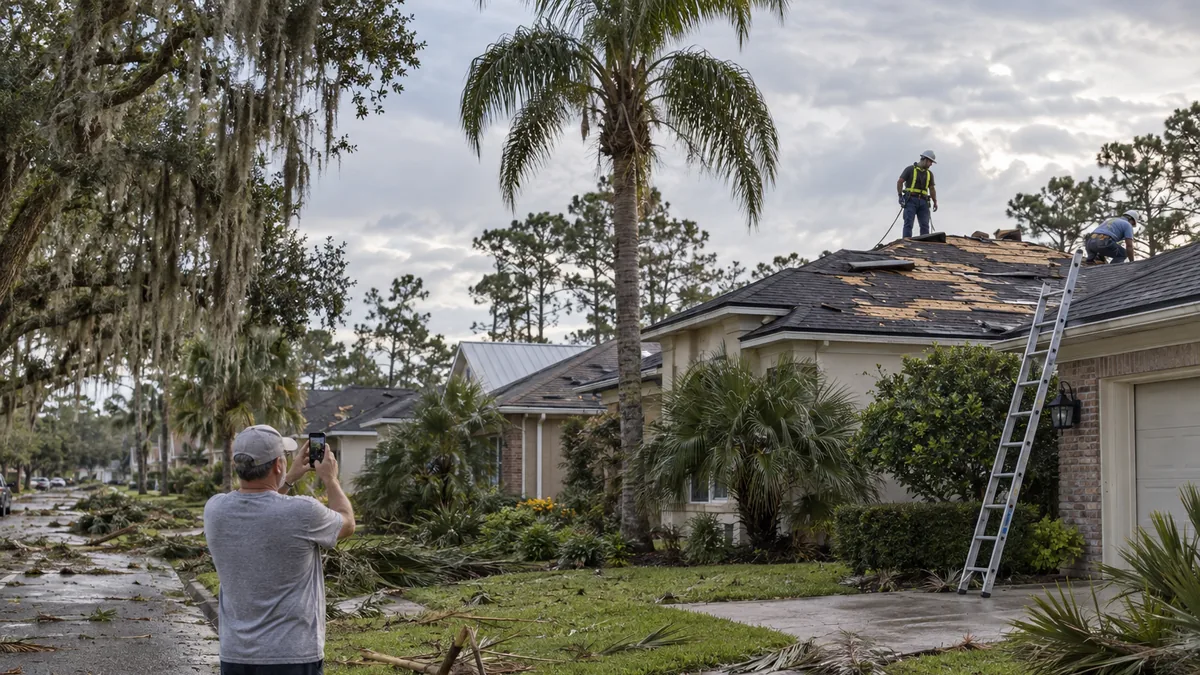
August through October. The peak of hurricane season. Tropical systems bring long rain bands and sustained wind that can push water under shingles on any slope. After a named storm passes, inspect the ceilings and the attic within a day or two, photograph anything new, and read the storm damage insurance claim guide before calling your carrier.
October through February. Nor’easters set up offshore and drive rain from the northeast for two or three days at a time. Homes at the Beaches, in Atlantic Beach, Neptune Beach, Jacksonville Beach and Mayport, feel this first and hardest. A leak that only appears during these multi-day events and only on the northeast side of the house is a classic wind-driven roof leak. Winter mornings also bring the attic condensation problem described above.
Spring. Drier weather and occasional hail. A good time for a calm inspection before the summer storm pattern begins.
Checking the attic safely
The attic is where most of the answers are, but a Jacksonville attic in summer is not a place to linger. Go in early morning, before the sun heats the roof. Carry a strong flashlight and your phone. Step only on joists or on a board laid across them, because the drywall between them will not hold your weight. Watch your head: roofing nails poke through the decking all over. Wear a dust mask around fiberglass or blown insulation.
Once you are up there, look for:
- A dark trail on the underside of the decking, usually running downhill from one spot.
- Wet, matted or compressed insulation over the ceiling stain.
- Water in the air handler’s secondary drain pan, or water stains around the unit.
- Condensation beads on ducts or torn duct insulation.
- Daylight at the roof penetrations: pipe vents, exhaust fans, the chimney.
- Whether soffit vents are blocked by insulation, and whether bathroom fans actually exhaust outside.
If you see water in the drain pan or dripping ducts and a dry decking above, call an HVAC contractor. If you see a dark trail from the decking and dry ducts, call a roofer. If there is any electrical fixture in a wet area, turn off that circuit before touching anything.
Musty smells, mold and why speed matters
In Jacksonville humidity, mold does not wait. Wet insulation and damp drywall can start growing mold within a few days in warm weather, and the smell often shows up before any visible stain. A musty odor that is strongest in one room, especially after rain, is worth an attic check that same week.
Once the source is found and stopped, the interior side needs drying. Pull out wet insulation, run a fan or dehumidifier, and wait until everything is fully dry before patching drywall. A large area or a strong smell calls for a mold remediation company before the ceiling is closed. Mold that forms after a slow leak that went unaddressed for months is often excluded by insurers, which is another reason to act on the early signs.
What photos to take, and when it is urgent
Photographs help the roofer and, if storm damage is involved, the insurance adjuster. Take:
- A wide shot of the room showing where the stain is.
- A close shot of the stain, with a date stamp.
- The same stain after the next rain, to show growth.
- The attic above, if you can reach it safely.
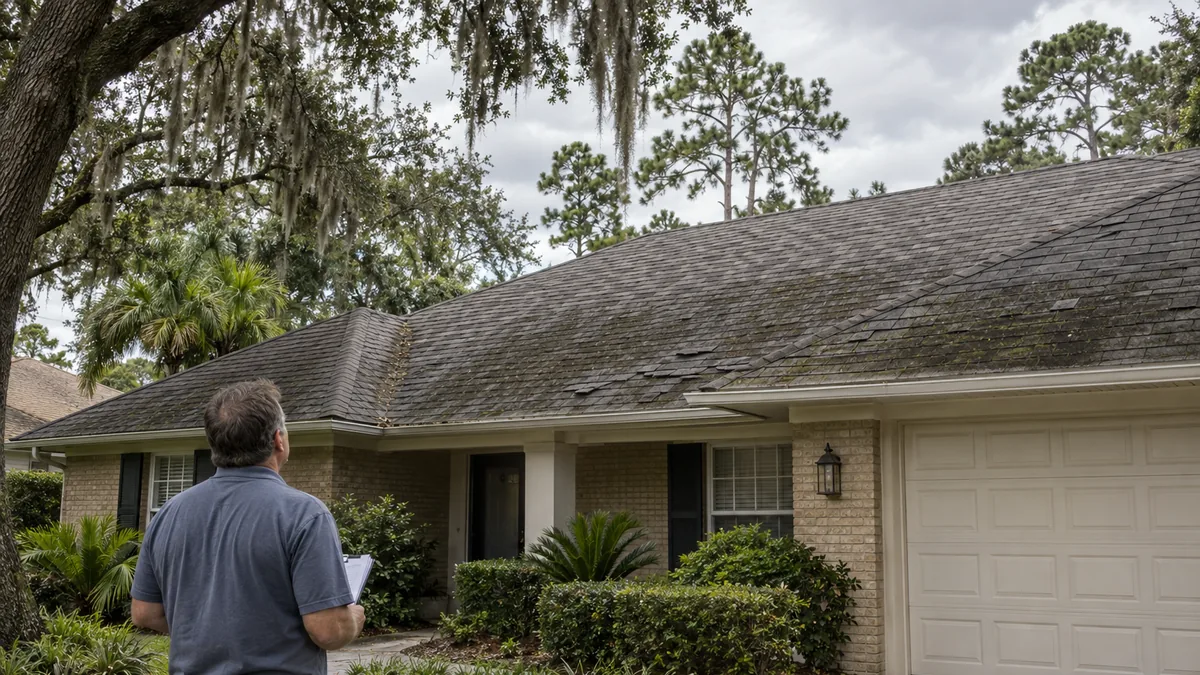
- The roof above that room from the ground, zoomed in.
Call for emergency help when water is actively coming through during a storm, when a ceiling is sagging, when water is near wiring or a light fixture, or when a limb has broken through the roof. The emergency roof repair page explains how tarping and a same-day dry-in work. For everything else, a stain that is not growing, a smell, a few granules, schedule an inspection before the next storm cycle. Anywhere in Duval County, from Oceanway to San Marco to Ponte Vedra Beach, the principle is the same: the roof is inspected first, the cause is written down honestly, and nobody sells a roof repair for an air conditioner problem.
Questions on this topic
How can I tell if a ceiling stain is a roof leak or my air conditioner?
Compare the stain to the weather and to the thermostat. A roof leak grows after rain and stays the same during a dry spell. An AC problem grows on hot, humid days when the system runs hard, even without a cloud in the sky. Stains near a supply register, directly under the attic air handler, or along the path of a duct point to condensation. Stains near a plumbing vent, a chimney, a valley or an outside wall after a storm point to the roof. When the pattern is not clear, a roofer and an HVAC technician can each rule out their side.
Is a musty smell in my house a sign of a roof leak?
It can be, but in Jacksonville humidity a musty smell has many possible sources. Wet insulation in the attic from a slow roof leak is one. Others include a clogged AC condensate line, a sweating duct, a slow drip under a sink, or a damp crawl space. If the smell is strongest in one room and gets worse after rain, check the ceiling and the attic above that room first. If it is worse when the AC runs, start with the air handler and the ducts. Either way, do not ignore it for long, because mold can start within days.
What photos should I take when I find a possible roof leak?
Take a wide shot of the room showing where the stain sits, then a close shot of the stain with the date visible on your phone. Photograph it again the next time it rains so the growth is recorded. If you can safely reach the attic, photograph the underside of the decking above the stain, any wet insulation and the nearest pipe, vent or duct. From the ground, zoom in on the roof above that room. These photos help a roofer find the source faster and help an insurance adjuster if the damage came from a storm.
Is it safe to go into my attic to look for a leak?
It can be if you take precautions. Go in the morning, because Jacksonville attics in summer can pass dangerous temperatures by early afternoon. Step only on joists or on a board laid across them, never on the drywall between them. Watch for roofing nails coming through the decking overhead, and wear a dust mask around old insulation. Turn off power to any light fixture in the wet area before touching it. Bring a good flashlight and tell someone you are up there. If any of that feels uncomfortable, leave it to the roofer.
When is a roof leak an emergency in Jacksonville?
Treat it as urgent when water is actively dripping or running during rain, when a ceiling is sagging or bulging, when water is near a light fixture, outlet or electrical panel, or when a limb or storm has opened a visible hole in the roof. In those cases, move valuables, shut off power to the affected area if water is near wiring, and call for emergency tarping. A small stain that appeared after one storm and has not grown is not an emergency, but it should still be inspected before the next round of afternoon thunderstorms.
Can attic condensation look like a roof leak?
Yes, and it fools a lot of homeowners. When an attic is poorly ventilated, warm moist air collects under the roof deck. On cool mornings in winter, or around cold ducts in summer, that moisture condenses and drips onto the insulation, leaving spots on the ceiling that look like a leak. The tell is that the dampness is spread across the underside of the decking or concentrated around ducts rather than following one trail from a single entry point. Blocked soffit vents and bathroom fans that exhaust into the attic are common causes.
- roof leak signs
- AC condensation
- attic moisture
- mold
- leak detection
- Jacksonville