
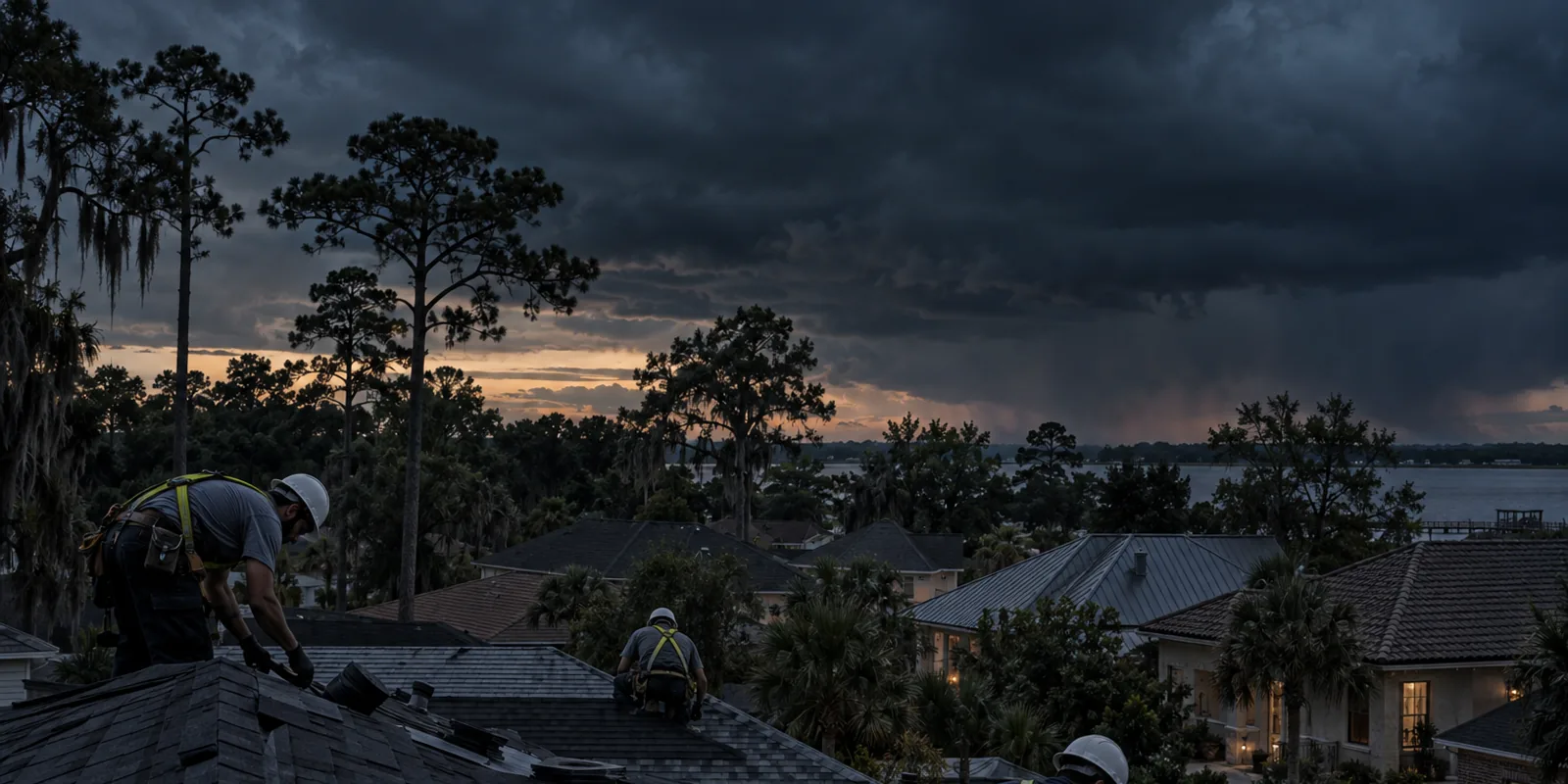
Roofers in Panama Park, Jacksonville
Panama Park is a small, old riverfront neighborhood along the Trout River where Main Street North crosses toward the Northside, a few miles north of downtown Jacksonville off I-95. Cottages, riverfront homes and Main Street storefronts share a tight grid, and all permits go through the City of Jacksonville.
What usually goes wrong on Panama Park roofs
- Aging 3-tab shingles on 1940s and 1950s cottages with granule loss, curling and lifted tabs
- River humidity and open exposure along the Trout River corroding flashings and drip edge
- Rotted rafter tails and eave decking on frame cottages with failed or missing gutters
- Low-slope porch and addition roofs leaking where they meet the original house
- Flat roofs on Main Street storefronts ponding and cracking around old patches and drains
Local notes from the roofers
Panama Park is one of the older pockets of the Northside, and most roofs sit on small frame and block cottages from the 1920s to 1950s between Main Street North and the Trout River. The typical problem is simple age: 3-tab shingles curled and bald, drip edge and flashings rusted by the damp air off the river, and rafter tails at the eaves rotted behind gutters that stopped working. Riverfront homes take wind off the water during nor'easters and tropical systems, so lifted shingles on the water-facing slope are common after a storm. Many cottages have a porch or rear addition roofed at a lower pitch, and the junction with the original house is a reliable leak point. On Main Street, the small storefronts carry flat roofs patched for decades that pond after every Jacksonville afternoon downpour. Estimates in Panama Park usually separate decking and fascia repair from the shingle work, since the wood is often the bigger job. Permits are pulled with the City of Jacksonville, without historic review. Here, Florida insurers often require a four-point inspection on older homes, and a permitted roof repair helps the file.
Homes and roof types in Panama Park
Panama Park sits where Main Street North crosses the Trout River: 1920s to 1950s frame and block cottages and bungalows on a compact grid, riverfront homes along the Trout River with bigger roofs, and small commercial buildings on Main Street, mostly under architectural or aging 3-tab shingles with a few metal roofs.