
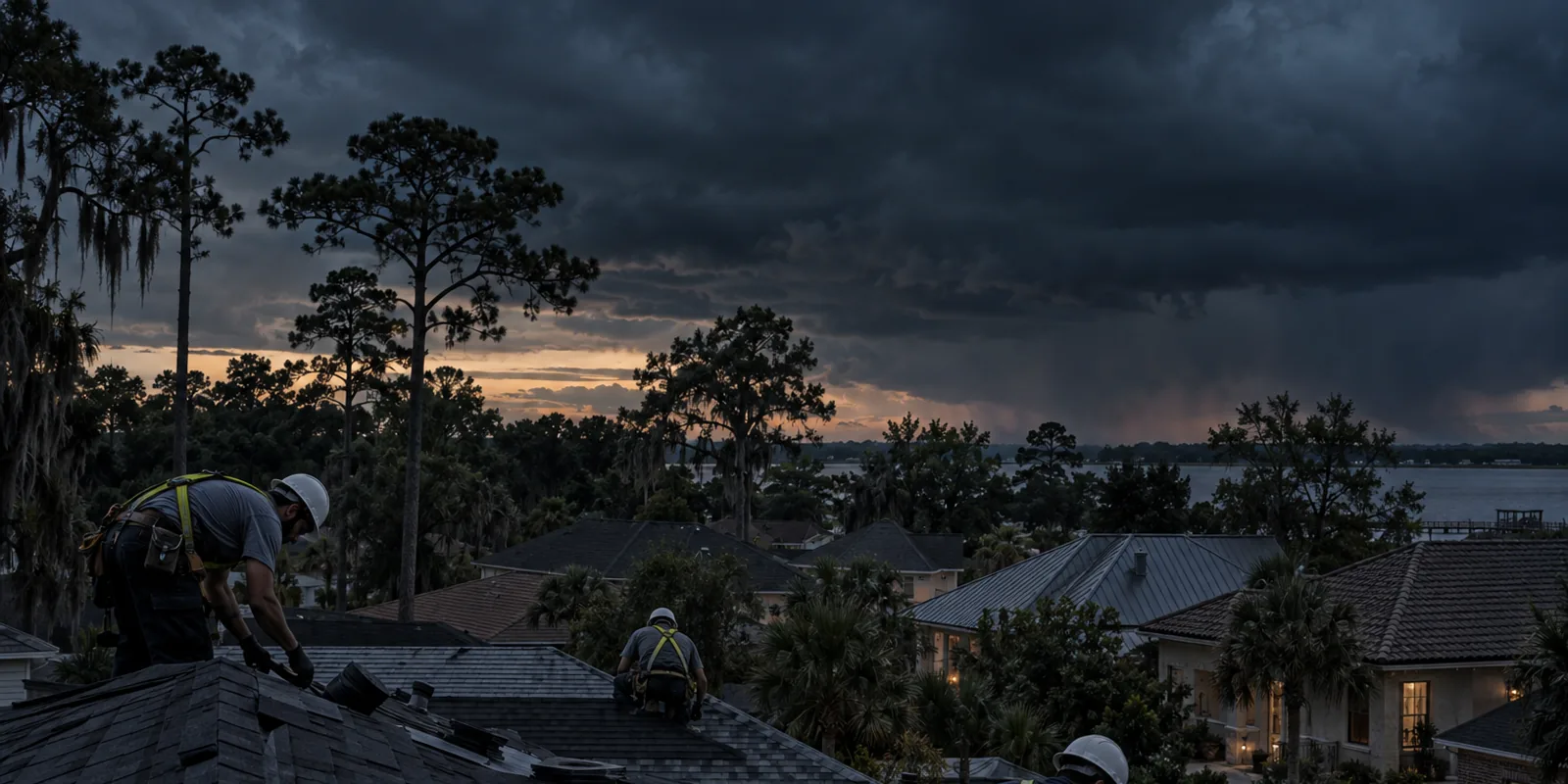
Roofers in Neptune Beach, Florida
Neptune Beach is the smallest of the three Beaches cities, a walkable grid between Atlantic Boulevard and Jacksonville Beach where old cottages and new coastal builds sit side by side. The City of Neptune Beach issues its own roofing permits, and the narrow lots and close neighbors shape how a crew stages a job here.
What usually goes wrong on Neptune Beach roofs
- Low-slope hip roofs on 1950s cottages with shallow pitch that lets nor'easter rain back up under shingles
- Rusted valley metal and step flashing on cottages that have never had the edge metal replaced
- Tabs blown off older 3-tab roofs on the ocean-facing gables during tropical storm gusts
- Rotted fascia and soffit at the eaves where gutters overflow onto block walls year after year
- Flashing failures where new second-story additions meet original cottage roofs
Local notes from the roofers
Neptune Beach roofs tend to be either sixty years old or six. The original cottages on the streets off Penman Road and Florida Boulevard were built with shallow hip roofs never meant for a Florida nor'easter, and when a storm parks offshore the rain climbs uphill under the shingle laps on the north and east faces and stains a bedroom ceiling. The valley metal and step flashing on those cottages are often original galvanized steel, rusted thin by salt air, and the repair is rarely just a shingle. The new coastal homes closer to the ocean use standing seam metal and hip shapes that shed wind well, but the additions in between, where a second story was stacked on a cottage, are where flashing gets missed. An estimate in Neptune Beach usually covers edge metal, valleys, boots and fascia together, because doing one at a time on a coastal roof wastes money. Permits go to the City of Neptune Beach, not the City of Jacksonville. Lots are narrow, so material drops and dumpster placement are planned around neighbors and street parking near the Beaches Town Center.
Homes and roof types in Neptune Beach
A compact grid of 1950s and 1960s block cottages and ranches between Penman Road and the ocean, 1970s and 1980s duplexes and small condos near Atlantic Boulevard, and a steady wave of teardowns replaced by two-story coastal homes under standing seam metal or hip-roofed architectural shingles.