
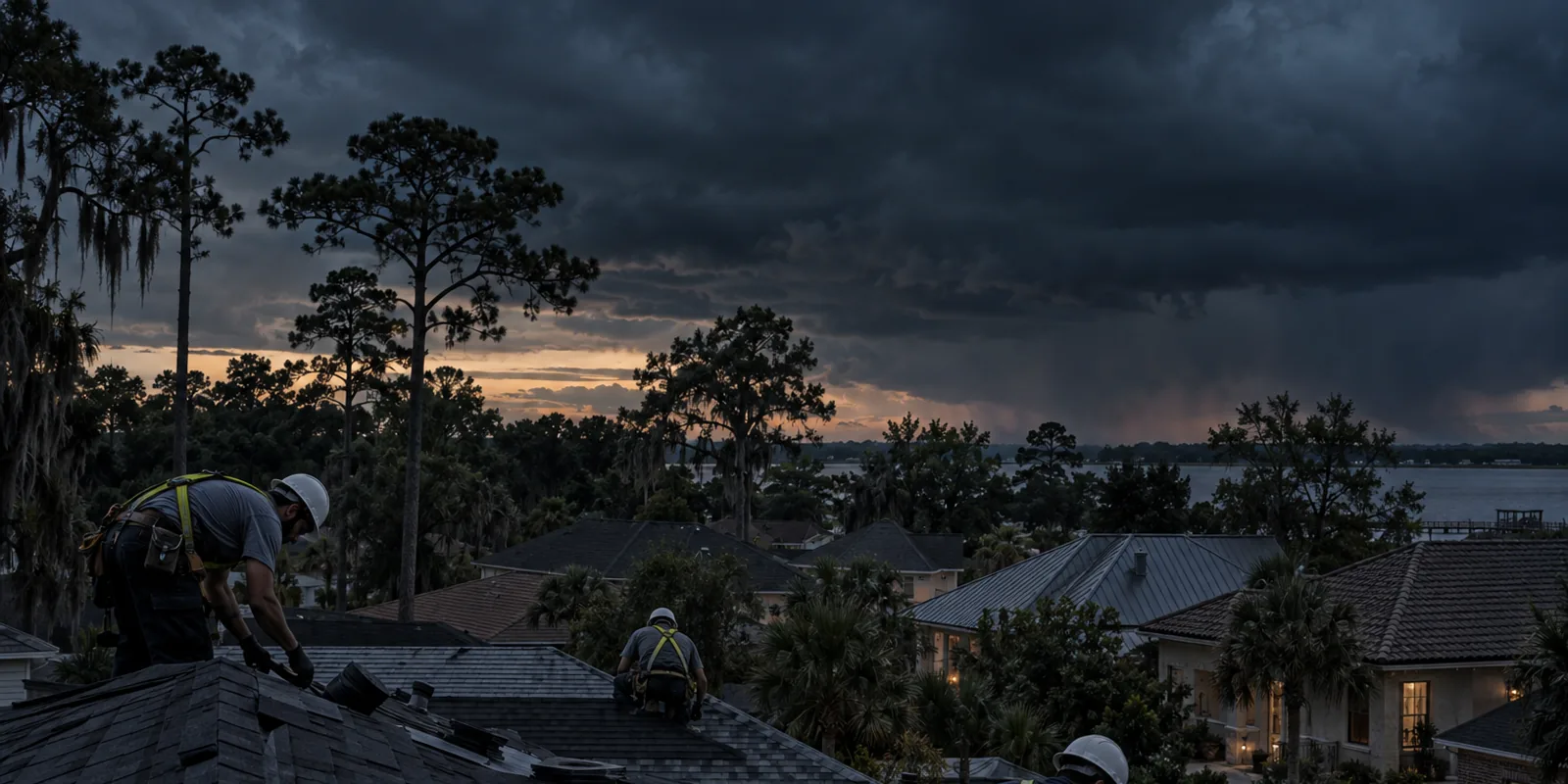
Roofers in Murray Hill, Jacksonville
Murray Hill is the working-class neighbor of Riverside and Avondale, a grid of modest bungalows and cottages around the Edgewood Avenue commercial strip, now popular with first-time buyers and renovators. It sits outside the historic district, so roof work needs only a City of Jacksonville building permit.
What usually goes wrong on Murray Hill roofs
- 1920s and 1930s bungalow roofs with layered shingles over original wood shingle or plank decking
- Porch roofs at low pitch tied into the main gable, leaking at the junction and rotting the porch ceiling
- Brick chimney flashings and cracked crowns letting water into interior walls
- Oak canopy debris in gutters and valleys, with algae and moss on north-facing slopes
- Undersized or missing attic ventilation cooking shingles on small unvented hip roofs
Local notes from the roofers
Murray Hill is where many first-time Jacksonville homeowners meet their first old roof. The bungalows and cottages off Edgewood Avenue, Post Street and Cassat Avenue date from the 1920s to the 1950s, and many still have wood shingle or plank decking under two layers of asphalt, so a re-roof usually means new plywood over the old boards. The low-pitched front porch roof is the classic Murray Hill leak: it meets the main gable at a shallow angle, the flashing was rarely done well and the porch ceiling rots before water shows inside. Brick chimneys with cracked crowns and tired flashing come next. The oak canopy is nearly as heavy as in Avondale, so gutters, valleys and north slopes stay full of leaves and moss. Small hip roofs with no ridge vent and painted-over soffits run hot, and shingles age faster than expected. A written estimate typically covers tear-off, decking, ventilation and flashing separately so buyers see what is structural. Permits are pulled with the City of Jacksonville, without the historic review of Riverside and Avondale. For Florida insurance, a permitted re-roof with photos makes renewal easier.
Homes and roof types in Murray Hill
Murray Hill filled in from the 1920s through the 1950s around Edgewood Avenue: brick and frame bungalows, small Tudor cottages and minimal traditional homes with moderate gables and hips, plus 1950s block ranches on the western streets, mostly under architectural shingles with some older metal on porches and a few whole roofs.