
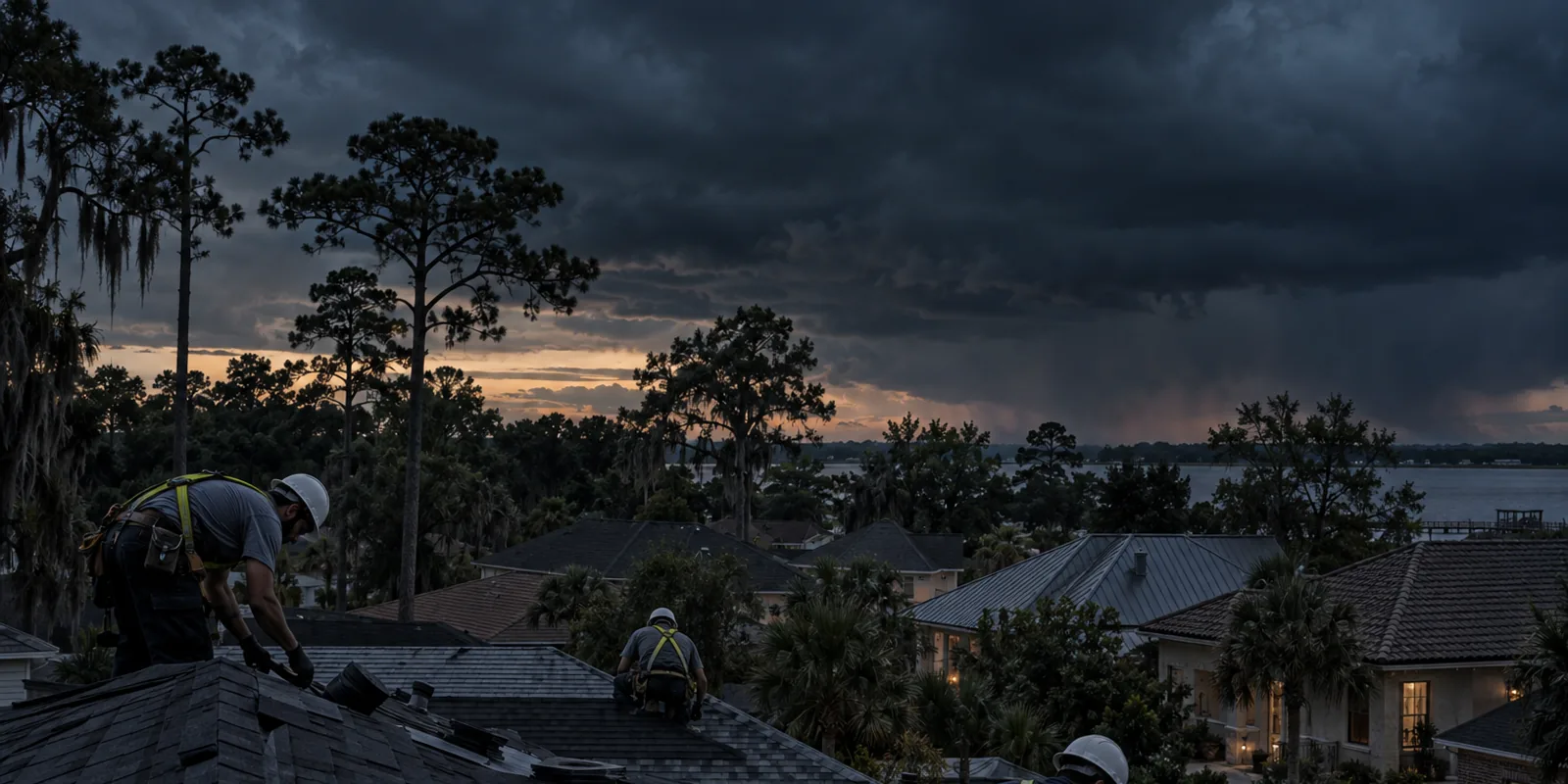
Roofers in Jacksonville Beach, Florida
Jacksonville Beach is the largest of the three Beaches cities, running from the pier south to the Ponte Vedra line, with Beach Boulevard and JTB feeding in from the mainland. Roof permits go through the City of Jacksonville Beach, not the City of Jacksonville, and the oceanfront streets have the harshest exposure in Duval County.
What usually goes wrong on Jacksonville Beach roofs
- Nor'easter rain driven under shingle edges on the northeast slopes of homes facing the open beach
- Rusted drip edge, gutter hangers and roof-to-wall flashing within a few blocks of the ocean
- Ridge caps and rake shingles lifted by tropical storm gusts that hit the beachfront first
- Exposed screws backing out on older screw-down metal roofs and letting water into the deck
- Flat and low-slope sections over garages and additions on cottages holding water after afternoon storms
Local notes from the roofers
Most roof calls in Jacksonville Beach come from the blocks between 3rd Street and the ocean, where salt air and onshore wind do more damage in ten years than the rest of Jacksonville sees in twenty. On the older block cottages of the numbered streets, the failure is usually metal: rusted drip edge, corroded nail heads at the ridge, and pipe boots whose neoprene collars cracked years ago. On the 1970s and 1980s condos along 1st Street and near the pier, roofs are low-slope shingle or old modified bitumen patched too many times, and a nor'easter that sits offshore for three days finds every weak lap. Newer standing seam metal homes hold up well, but screw-down panels from the 1990s need their fasteners checked. An estimate here covers flashing and edge metal in detail, because that is where coastal roofs fail first, and notes whether the shingles are rated for the Florida coastal wind zone. Permits are pulled with the City of Jacksonville Beach. Insurers ask hard questions about roof age this close to the Atlantic, so a written inspection report often matters as much as the repair.
Homes and roof types in Jacksonville Beach
A mix of 1950s and 1960s concrete block cottages on the numbered streets, 1970s and 1980s condos and townhomes along 1st Street and near the pier, and two-story and three-story infill homes from the 2000s onward. Architectural shingles still cover most roofs, with standing seam metal now the common replacement east of 3rd Street.