
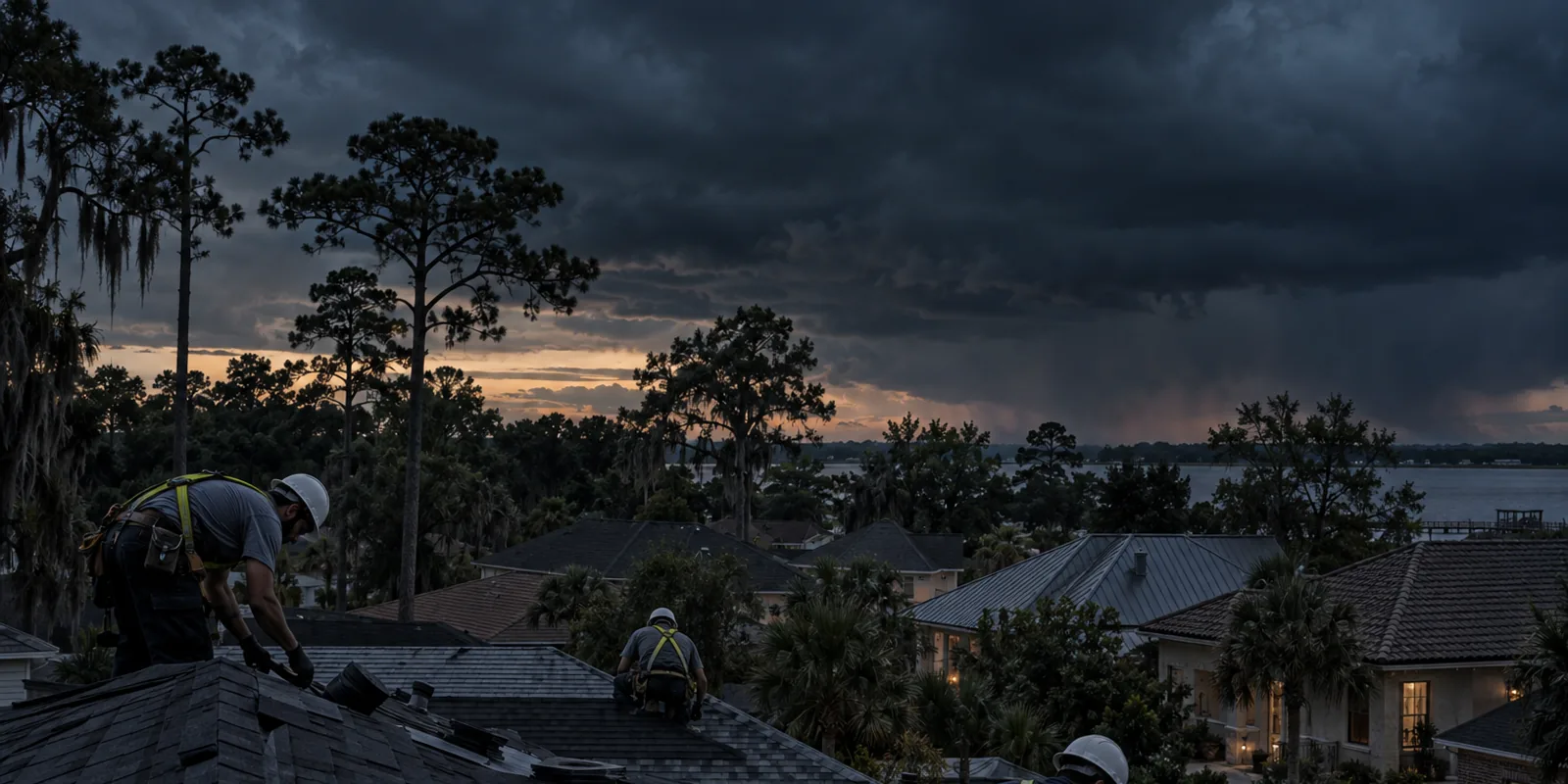
Roofers in Garden City, Jacksonville
Garden City is a broad, mixed area of northwest Jacksonville along Lem Turner Road between the Trout River and I-295, where old ranches and rural lots sit beside 1990s subdivisions and Lem Turner churches. Lots are large and access is easy, and all permits are City of Jacksonville and Duval County.
What usually goes wrong on Garden City roofs
- 1960s and 1970s ranches on their second or third shingle roof with original decking soft at the eaves
- Screw-down metal on older homesteads and outbuildings with rusted fasteners and lifted panel edges
- 1990s subdivision 3-tab shingles at end of life with lifted tabs and blown ridge caps
- Wind exposure across open former farmland with little tree cover to slow storm gusts
- Low-slope church and commercial roofs along Lem Turner Road ponding and leaking at drains
Local notes from the roofers
Garden City is a mix of eras, so a roofer here sees three jobs in one afternoon. The 1960s and 1970s block ranches off Lem Turner Road and Dunn Avenue are on their second or third shingle roof, with original decking soft at the eaves and old vents. The rural properties toward I-295 and the airport have screw-down metal on house, shop and shed, with fasteners backing out and rust spreading from every lap after years of Florida heat. The 1990s subdivisions that filled the old farmland were roofed in 3-tab shingles now brittle, lifting and losing ridge caps in tropical storm gusts that cross this open ground with little tree cover. Churches and small commercial buildings along Lem Turner carry low-slope roofs that pond and leak at the drains. The estimate depends on which of the three the house is, and a good one says whether the decking, the metal or the shingles are the real problem. Permits are pulled with the City of Jacksonville, with no historic review. Florida insurers ask for roof age and permit history on most homes here.
Homes and roof types in Garden City
Garden City stretches along Lem Turner Road and Dunn Avenue north of the Trout River toward I-295: 1950s to 1970s block ranches on large lots, rural homesteads with metal roofs, manufactured homes, 1990s and 2000s subdivisions filling in former farmland, and churches and small commercial buildings with low-slope roofs along Lem Turner.