
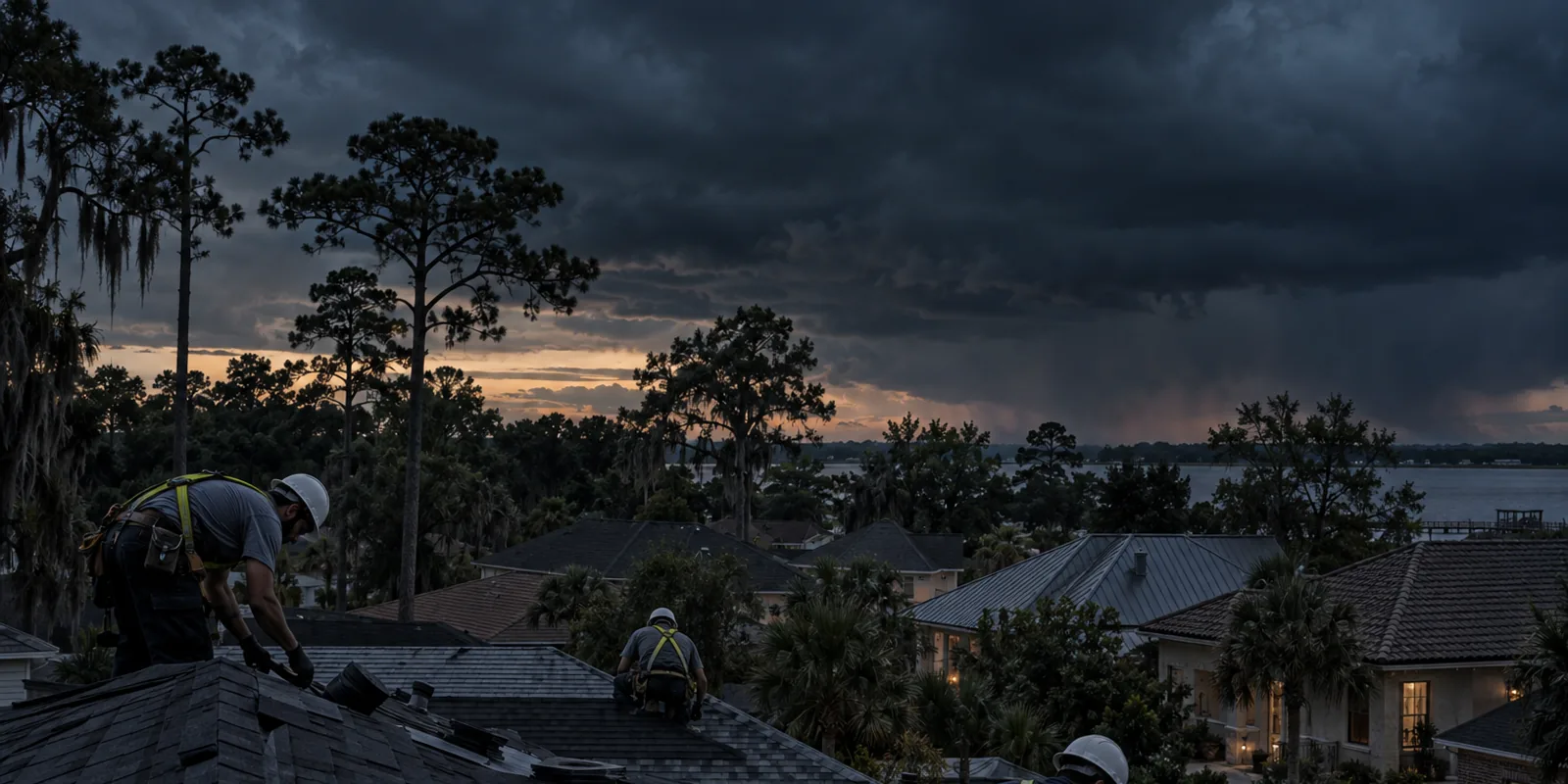
Roofers in Cedar Hills, Jacksonville
Cedar Hills is a settled mid-century neighborhood on Jacksonville's Westside, between Blanding Boulevard and Roosevelt Boulevard within a few minutes of NAS Jacksonville. Streets are flat, houses are single-story and easy to stage, and roofing permits go through the City of Jacksonville Building Inspection Division.
What usually goes wrong on Cedar Hills roofs
- 1960s block ranches on their third shingle roof with original decking that has never been replaced
- Wind-driven summer rain reaching the deck under worn 3-tab shingles on low-slope hips
- Pipe boots, gooseneck vents and satellite dish penetrations leaking into hallway ceilings
- Rotted fascia and eave decking behind clogged or missing gutters on gutterless overhangs
- Algae streaks and lichen on north slopes shaded by mature pines and cedars
Local notes from the roofers
Cedar Hills was built for Navy families in the late 1950s and 1960s, and most of the roofs are on their third or fourth covering. The block ranches off Wilson Boulevard, Lane Avenue and side streets between Blanding Boulevard and NAS Jacksonville have simple hip and gable roofs at low pitch, which makes them quick to re-roof but slow to shed water. Wind-driven rain from the afternoon thunderstorms works under worn 3-tab shingles and shows up first at the pipe boots and old gooseneck vents. Many homes never had gutters, so the fascia and eave decking are soft on the drip side, and a roofer plans for some plywood replacement on most jobs. Mature pines and cedars shade the north slopes and keep algae and lichen going year round. An estimate in Cedar Hills usually lists shingles, new flashings and boots, drip edge, and a per-sheet allowance for decking so the homeowner is not surprised. Permits are City of Jacksonville with no historic review. Because these roofs are often past the age Florida insurers tolerate, a permitted replacement with a wind mitigation form is often the practical answer.
Homes and roof types in Cedar Hills
Cedar Hills was built in the late 1950s and 1960s west of Roosevelt Boulevard and NAS Jacksonville: concrete block ranches with low hip and gable roofs on quiet curving streets off Blanding Boulevard and Wilson Boulevard, plus 1970s and 1980s infill, nearly all under asphalt shingles with a few metal re-roofs appearing.